






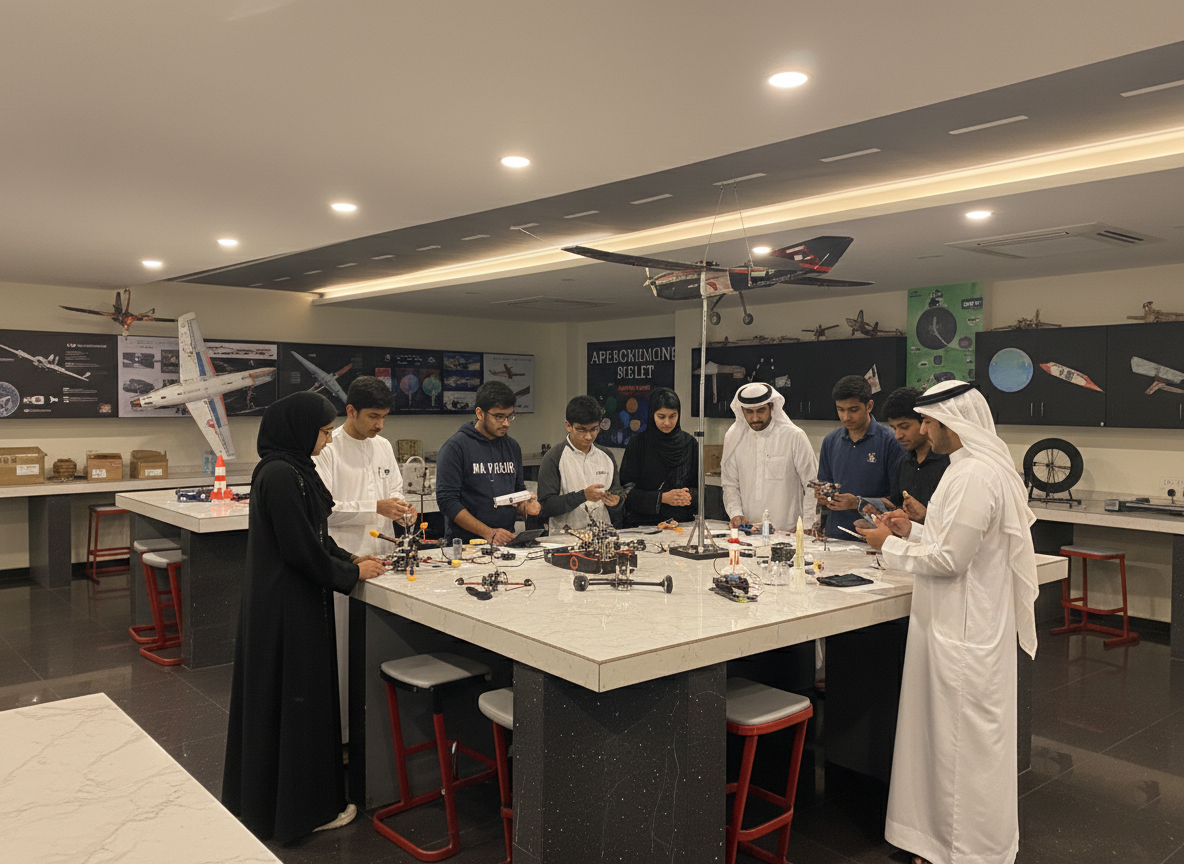
Aerospace education introduces students to the science and engineering behind aircraft and spacecraft. Learners understand how physics and mathematics are applied in real flight systems, space missions, and advanced aviation technologies.
By connecting classroom theory with real-world applications, students develop analytical thinking, technical discipline, and a strong foundation for careers in aviation, defense, and space research.
What Students Learn
Students explore how aircraft and spacecraft are designed, tested, and operated. The program focuses on applying scientific laws to real aerospace systems rather than theoretical study alone.
This learning domain strengthens problem-solving skills, engineering logic, and systems-level thinking, preparing students for higher education and future technology-driven careers.
- aerodynamics and flight physics
- engineering design thinking
- systems engineering fundamentals
- applied physics and mathematics
- analytical problem-solving
- real-world aerospace applications
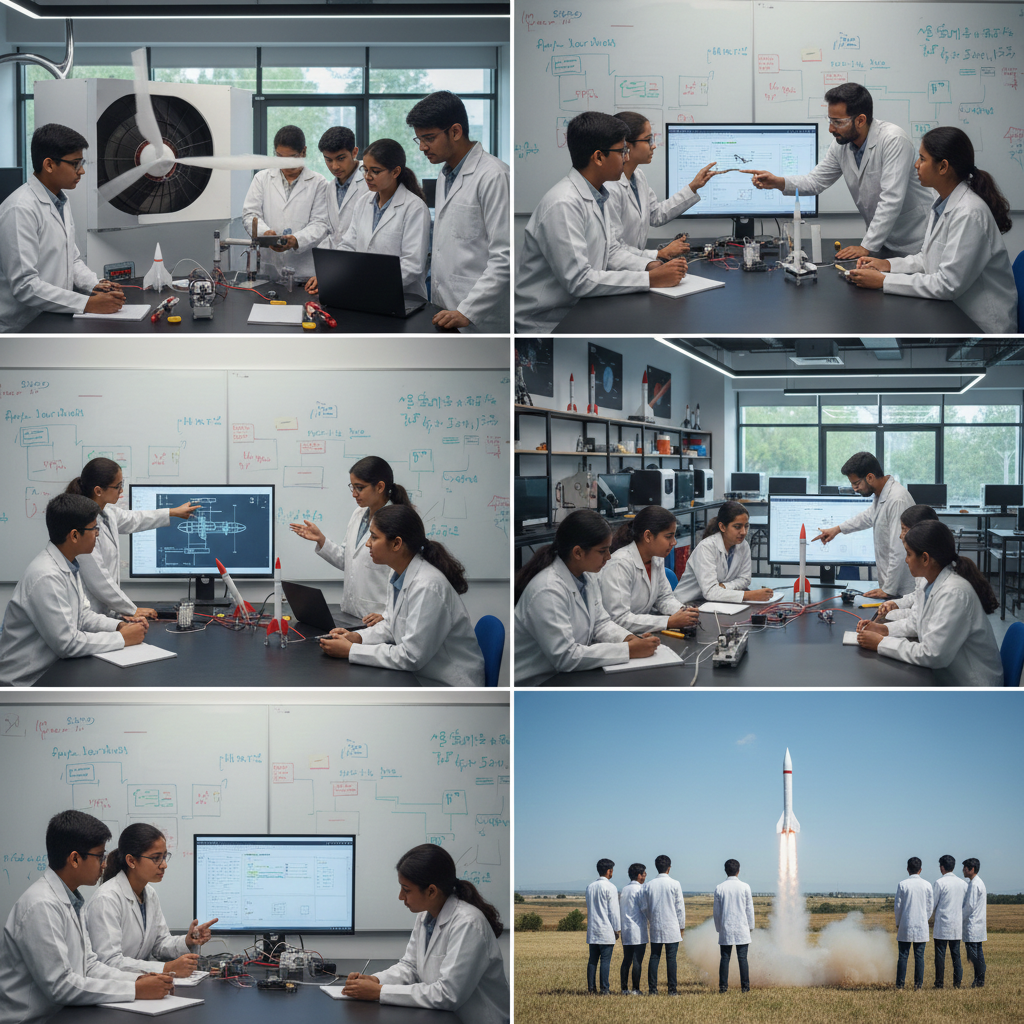
Learning Approach in Aerospace
The aerospace learning journey begins with foundational concepts in physics and mathematics, followed by applied engineering challenges. Students gradually progress toward complex systems, design analysis, and real-world aerospace problem solving.

step 01
foundational concepts
Understanding aerodynamics, flight principles, and applied physics through guided learning.
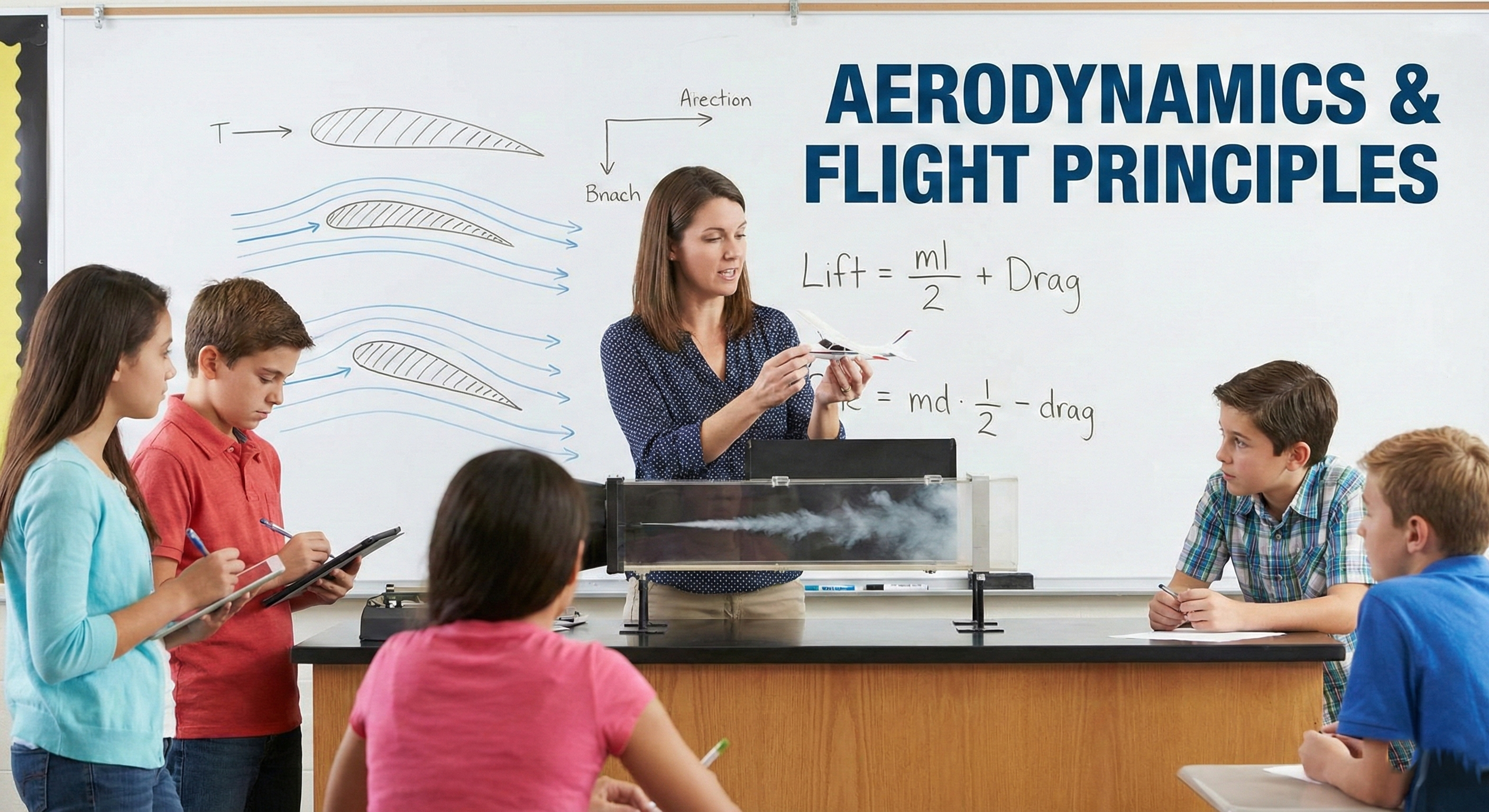

step 02
applied engineering
Hands-on exploration of aircraft systems, design logic, and engineering workflows.
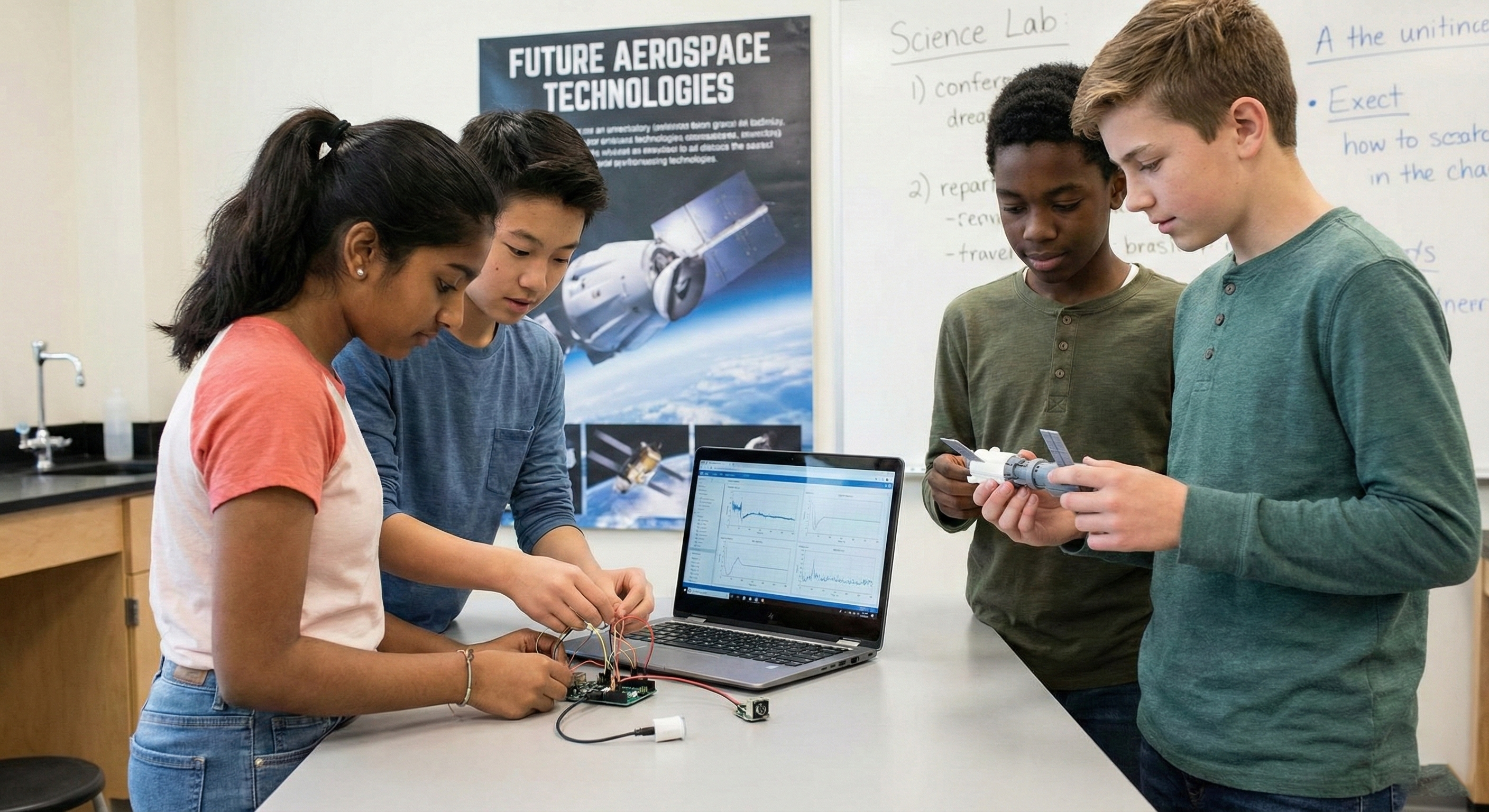

step 03
advanced exploration
Exposure to space systems, research thinking, and future aerospace technologies.
Lets address your questions today!
Aerospace learning is suitable for students starting from middle school through senior secondary levels. The curriculum is carefully designed to match the student’s academic stage, beginning with basic concepts like flight principles, forces, and simple aerodynamics, and gradually progressing toward advanced topics such as aircraft systems, propulsion, and space technologies.
Younger students focus on visual learning, practical demonstrations, and curiosity-driven exploration, while older students engage in deeper technical understanding, problem-solving, and real-world engineering applications. This structured progression ensures students learn comfortably without feeling overwhelmed.
Students do not need advanced academic knowledge to begin aerospace learning. A basic understanding of school-level mathematics and science is helpful, but the most important requirement is curiosity and a willingness to learn how things work.
Our programs focus on building core thinking skills such as logical reasoning, observation, and problem-solving. Concepts are explained step-by-step using practical examples, visual demonstrations, and real-world applications so students can understand even complex topics easily.
Yes, aerospace learning provides a strong foundation for multiple engineering and technology careers. Students develop a clear understanding of physics, mechanics, aerodynamics, and engineering principles, which are essential for fields such as aerospace engineering, mechanical engineering, aviation, and space research.
Early exposure also helps students make informed career decisions, improves their academic confidence, and prepares them for competitive exams, higher education, and technical career pathways.
Aerospace learning connects classroom knowledge with real-world applications. Students learn how scientific laws, equations, and engineering concepts are used in actual aircraft, rockets, and space systems.
This helps them understand the practical importance of subjects like physics and mathematics. They begin to see how theory translates into real technologies such as airplanes, satellites, and space missions, making learning more meaningful and engaging.
Aerospace learning opens the door to a wide range of exciting and high-impact careers. Beyond core engineering, students can explore roles such as:
- Systems Engineer (Aircraft / Spacecraft)
- Flight Test Engineer
- Avionics Engineer
- Airport Operations Manager
- Aviation Safety Analyst
- Space Policy & Regulatory Specialist
- Satellite Communications Specialist
- Aerospace Project Manager
- Airline Operations Analyst
- Aviation Data Analyst
Students can also work with leading organizations such as space agencies, aircraft manufacturers, research institutions, and defense organizations. Beyond aerospace, the skills gained also apply to robotics, mechanical engineering, and advanced technology sectors.

 +971 54475 7039