







Machine Learning introduces students to data-driven intelligence and predictive systems that power modern technologies. Learners understand how machines analyze data, identify patterns, and make informed decisions.
This domain builds advanced analytical thinking and problem-solving skills while exposing students to future-ready technologies used across industries.
What Students Learn
Students learn how data is collected, processed, and transformed into intelligent predictions. Machine Learning encourages logical thinking and structured experimentation.
Through real-world examples, learners gain exposure to how AI systems evolve through continuous learning and improvement.
- data analysis and data modeling
- pattern recognition techniques
- predictive analytics
- algorithmic thinking
- machine learning fundamentals
- real-world data interpretation

Machine Learning Learning Path
The Machine Learning learning path guides students from understanding raw data to building models that can analyze patterns and predict outcomes effectively.

step 01
data understanding
Learning how data is collected, cleaned, and prepared for analysis.


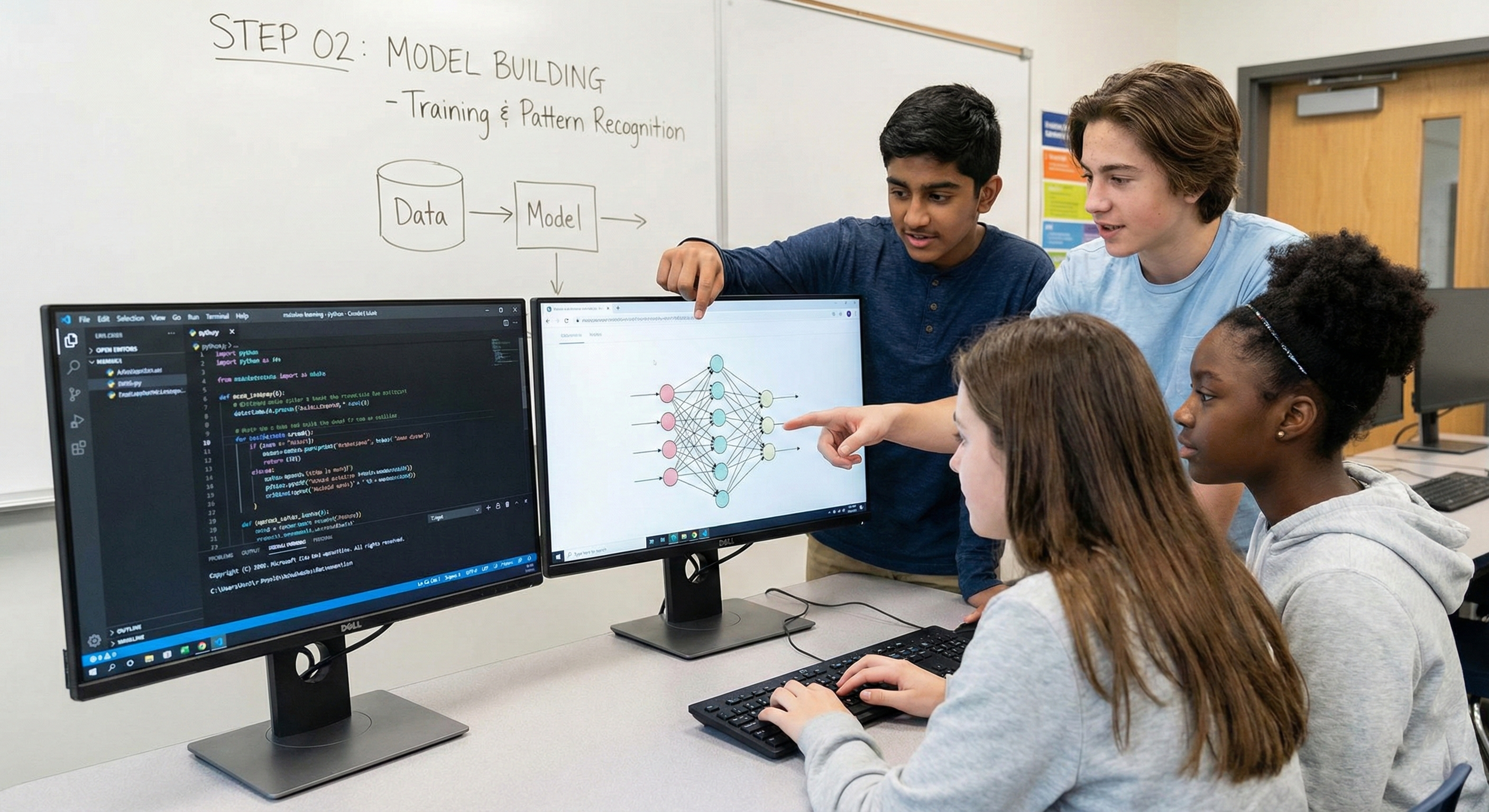
step 02
model building
Creating models that identify patterns and learn from data.

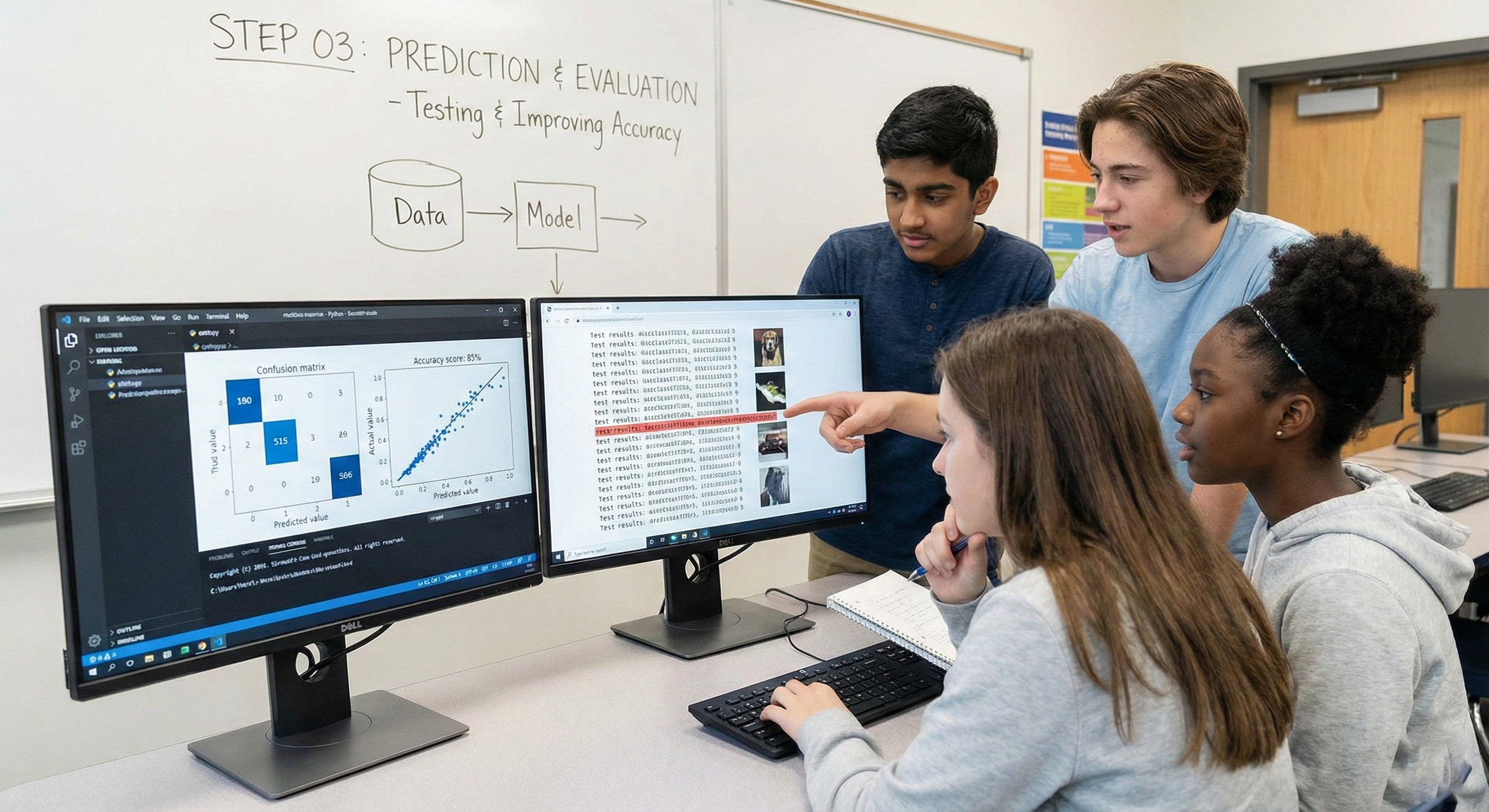
step 03
prediction & evaluation
Testing models, analyzing accuracy, and improving predictions.
Lets address your questions today!
Machine Learning (ML) is a branch of artificial intelligence that enables computers to learn from data, recognize patterns, and make predictions without being explicitly programmed. It allows systems to improve performance automatically as they process more information.
Machine Learning is used in everyday technologies such as recommendation systems, voice assistants, image recognition, fraud detection, healthcare diagnosis, and smart automation. It helps students understand how modern intelligent systems work and how data drives decision-making.
Machine Learning concepts are introduced gradually, making them accessible even for beginners. Students start with simple ideas such as pattern recognition and basic data analysis before moving to more advanced concepts.
Practical examples, visual demonstrations, and real-world applications help students understand complex topics in an easy and engaging way. This ensures learners build confidence as they progress.
Basic mathematics such as arithmetic, logic, and simple statistics is helpful when starting Machine Learning. Advanced mathematical concepts are introduced step-by-step as students progress.
The focus is on building understanding through practical examples and applications, ensuring students can learn Machine Learning comfortably without needing advanced math knowledge initially.
Machine Learning prepares students for high-demand careers in artificial intelligence, data science, robotics, automation, and smart technologies. These fields are rapidly growing and offer excellent career opportunities worldwide.
Students gain valuable skills in data analysis, problem-solving, and intelligent system development, making them future-ready for technology-driven industries.
Machine Learning is used across industries such as healthcare, finance, robotics, space technology, automation, sports analytics, and smart systems. Students can explore career roles such as:
- Applied AI Specialist (Healthcare, Sports, Finance)
- Computer Vision Engineer
- NLP Engineer (Language Models)
- AI Ethics & Policy Analyst
- MLOps Engineer
- Recommendation Systems Engineer
- Fraud Detection Specialist
- Smart Systems Architect (IoT + AI)
- Sports Performance Data Scientist
- AI Startup Co-founder
These careers allow students to work in leading technology companies, research organizations, startups, and global industries. Machine Learning skills also enable students to build intelligent applications and contribute to future innovations.

 +971 54475 7039