






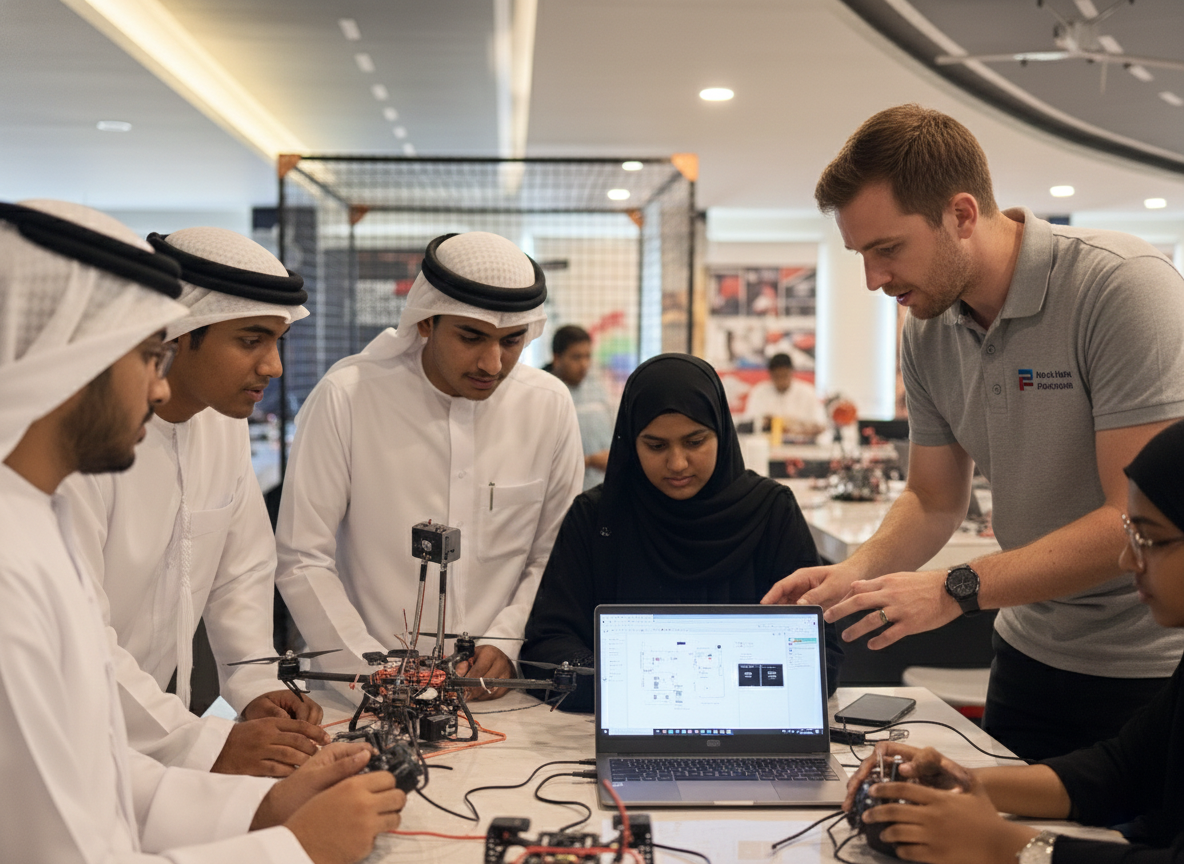
Drone education integrates electronics, mechanics, programming, and real-world applications through hands-on learning. Students explore how unmanned aerial vehicles are designed, controlled, and applied across industries.
By working with real drone systems, learners build technical confidence, improve spatial awareness, and understand responsible and ethical use of emerging technologies.
What Students Learn
Students gain a strong foundation in drone systems by combining mechanical design, electronics, and automation concepts into practical applications.
Learning focuses on how drones interact with real environments, emphasizing safety, precision, and ethical technology use.
- electronics and onboard sensors
- flight control systems and automation
- basic programming for UAVs
- mechanical structure and aerodynamics
- ethical and safe technology usage
- real-world drone applications
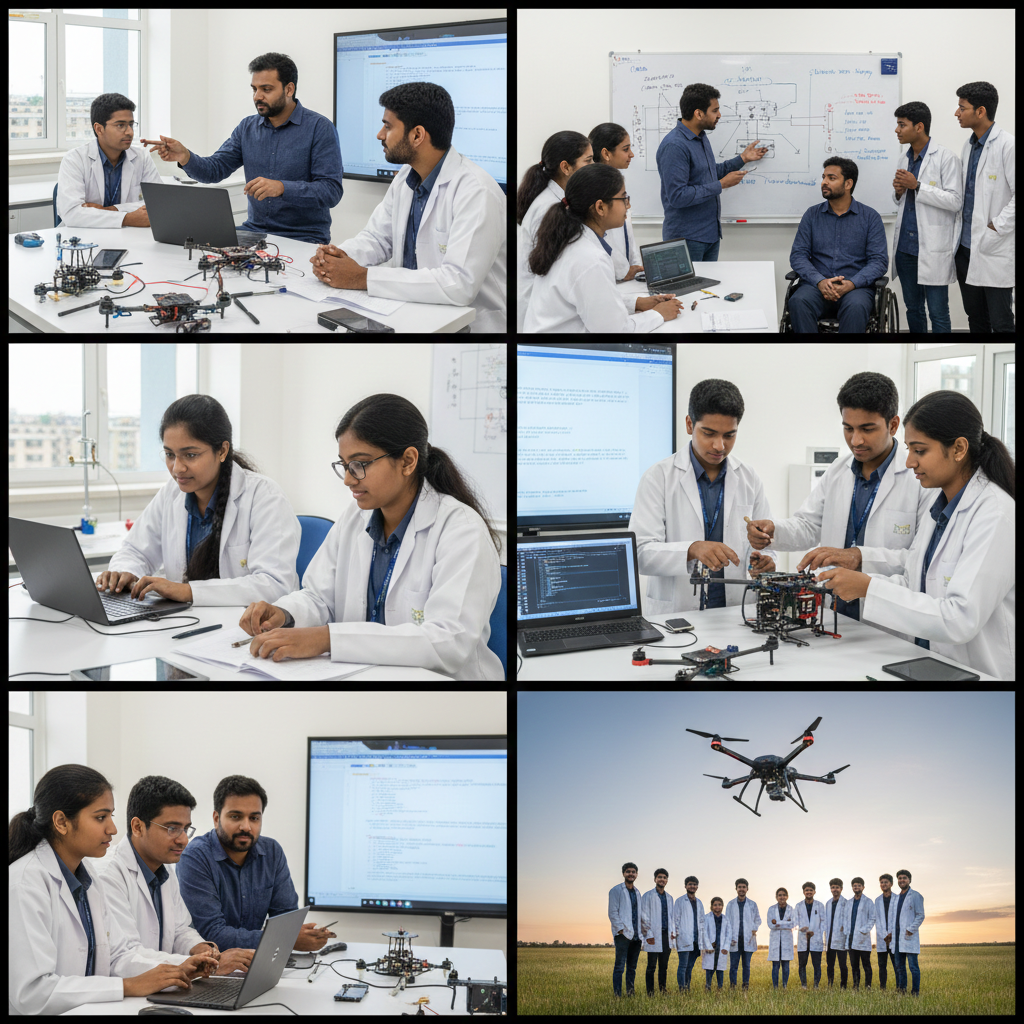
Learning Approach in Drones
Drone learning begins with understanding core components and gradually progresses toward automation, intelligent control, and applied problem-solving in real-world scenarios.

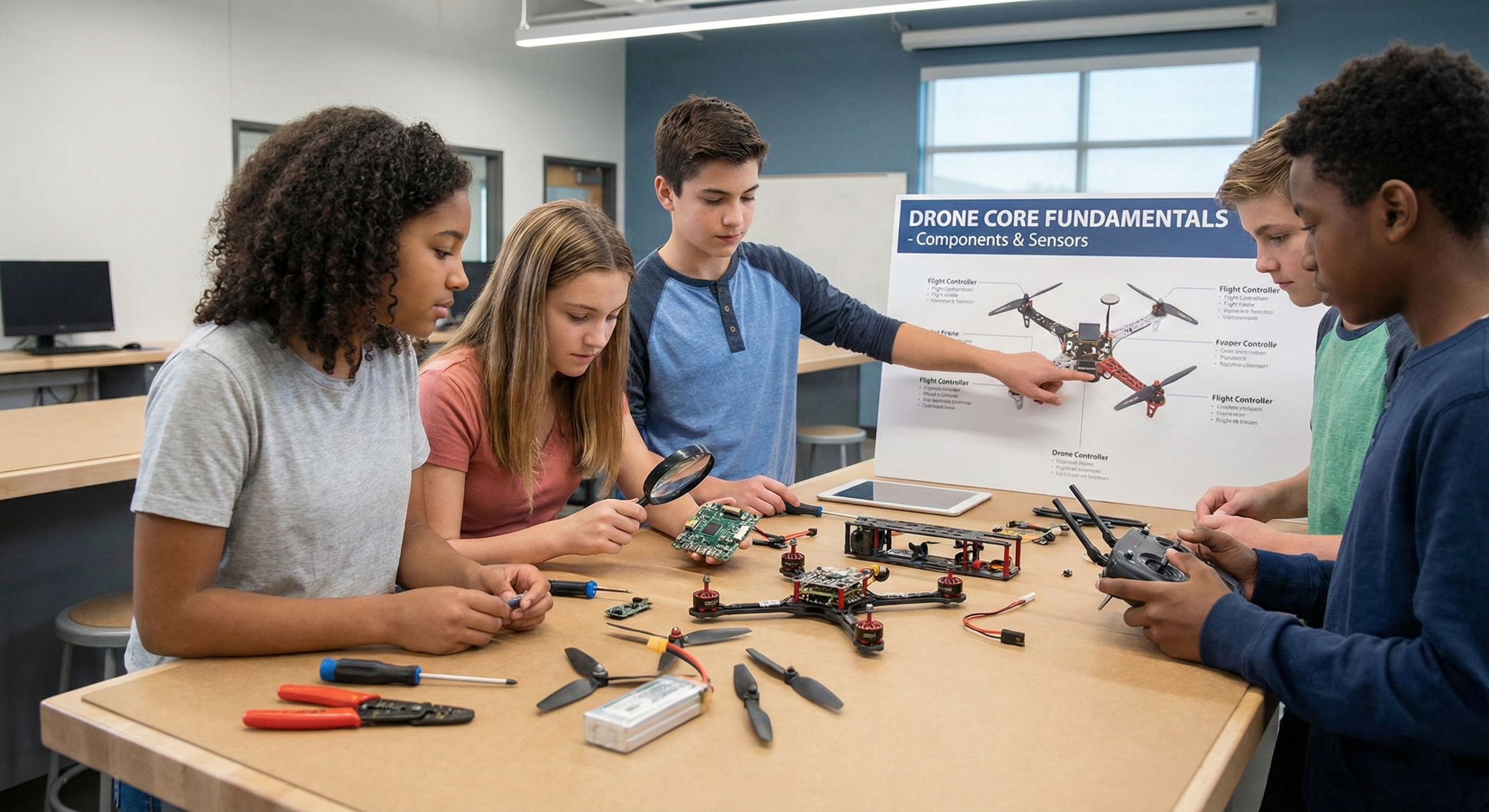
step 01
core fundamentals
Learning drone components, electronics, sensors, and basic flight principles.

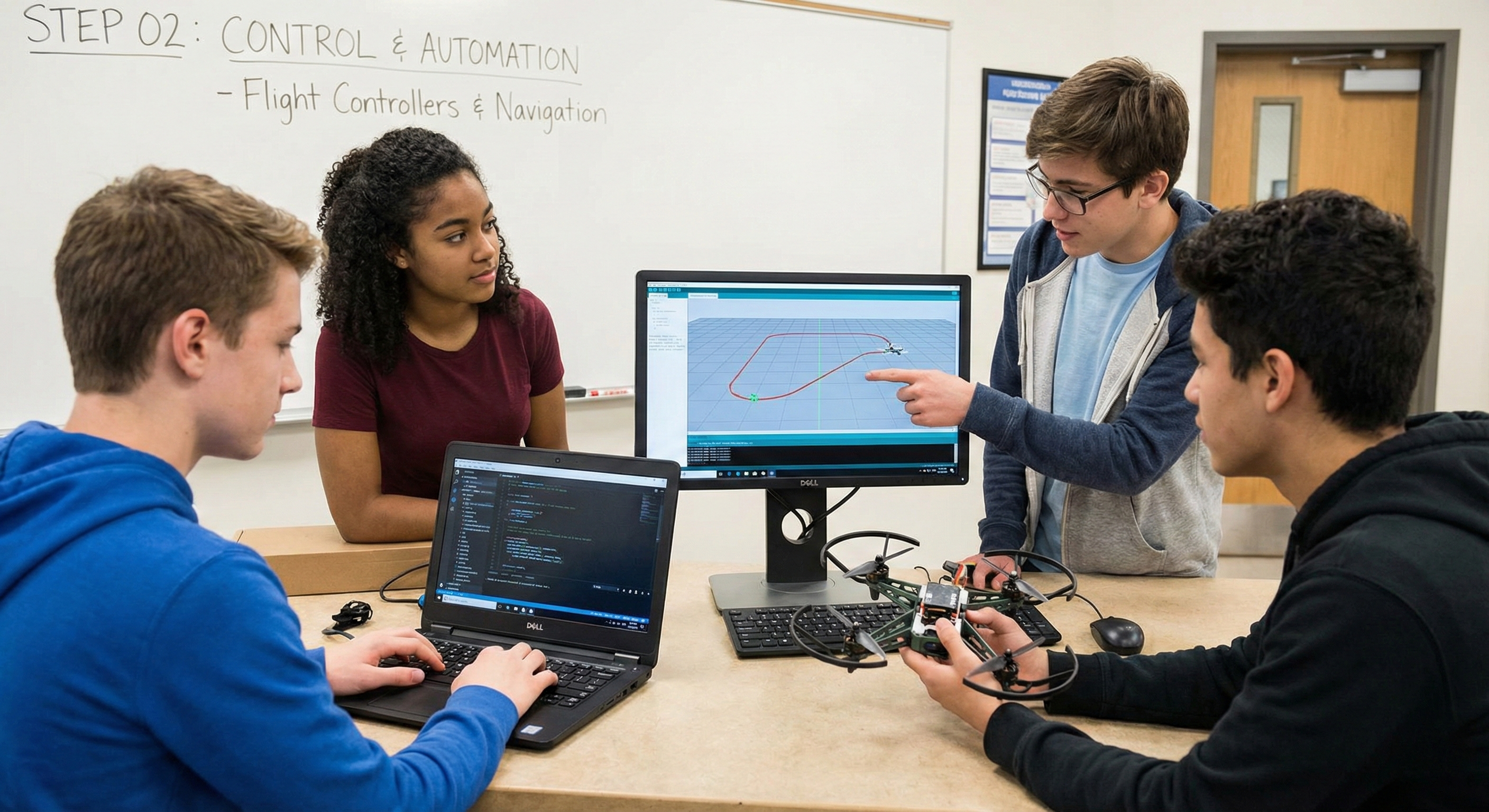
step 02
control & automation
Understanding flight controllers, navigation systems, and automated behaviors.

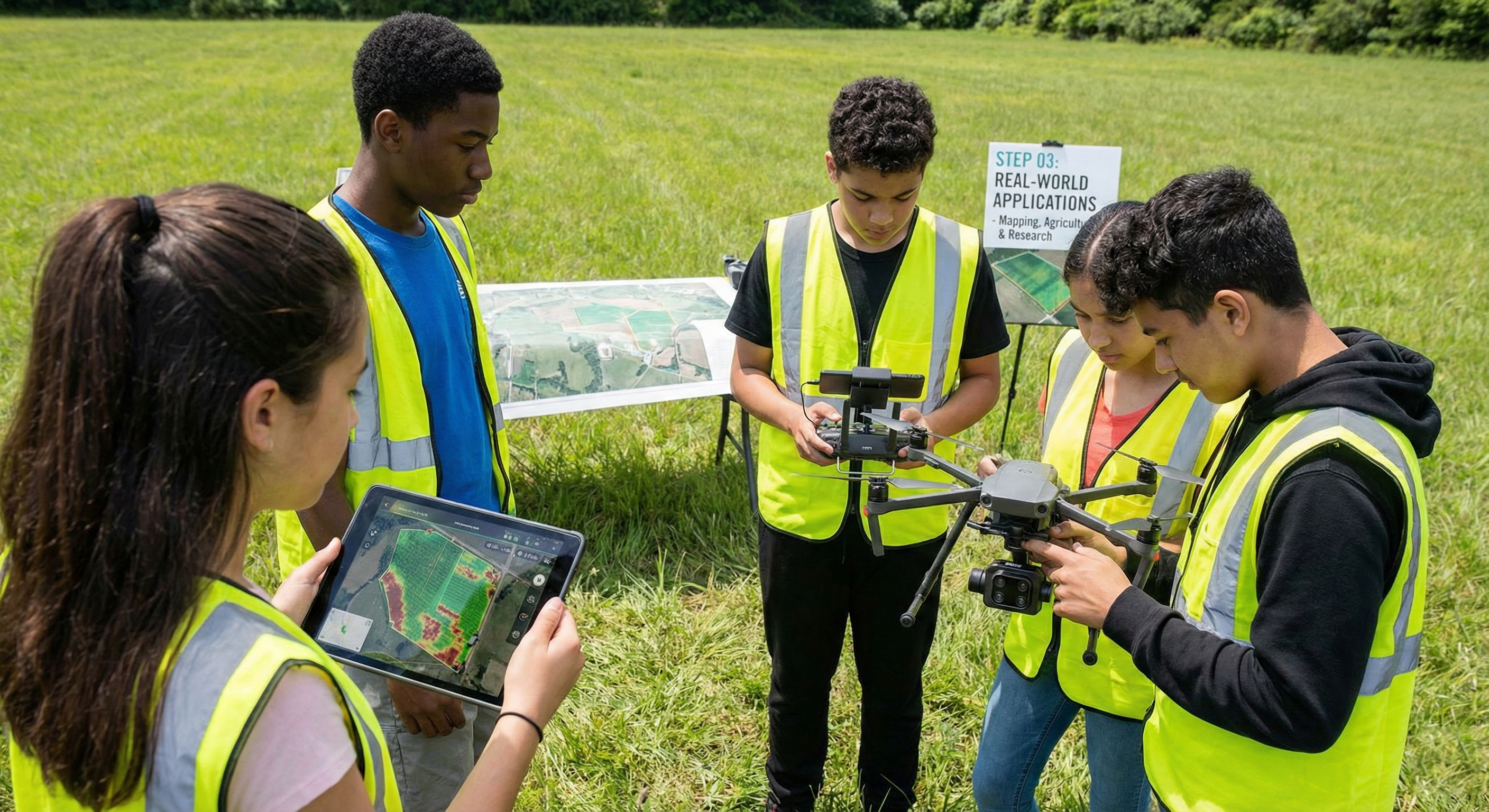
step 03
real-world applications
Applying drone technology to mapping, surveillance, agriculture, and research use cases.
Lets address your questions today!
Drone education is suitable for students from middle school through senior secondary levels. The curriculum is designed to match the student’s learning stage, starting with basic concepts such as drone components, flight principles, and safe operation.
As students progress, they learn advanced topics including drone programming, aerial mapping, automation, and real-world applications. This structured approach ensures students build strong technical skills while learning safely and confidently.
No prior programming experience is required. Students begin with basic drone operation, flight control, and understanding drone systems.
Programming concepts are introduced gradually through hands-on activities and real-world examples. This helps students develop both technical and practical skills without feeling overwhelmed.
Yes, safety is a core part of drone education. Students are taught proper safety protocols, responsible flying practices, and ethical use of drone technology.
They learn about airspace rules, safe handling, and operational guidelines, ensuring they understand both the technical and safety aspects of drone usage in real-world environments.
Drone education provides interdisciplinary skills in engineering, electronics, programming, automation, and aerial data analysis. These skills are highly valuable in modern industries.
Students gain practical experience with real technology, preparing them for careers in robotics, aerospace, smart infrastructure, mapping, agriculture, surveillance, and emerging drone-based industries.
Drone technology opens career opportunities across industries such as aviation, defense, smart cities, agriculture, filmmaking, and automation. Students can explore roles such as:
- Drone Operations Manager
- UAV Fleet Manager
- Search & Rescue Drone Operator
- Disaster Response & Survey Specialist
- Smart City Drone Planner
- Drone Software Developer
- Drone Hardware Technician
- Drone Compliance & Safety Officer
- Aerial Cinematographer
- Drone Startup Founder
These careers allow students to work with technology companies, government agencies, research organizations, media industries, and emerging drone startups. Drone skills also enable students to build their own drone solutions and contribute to future innovations.

 +971 54475 7039