






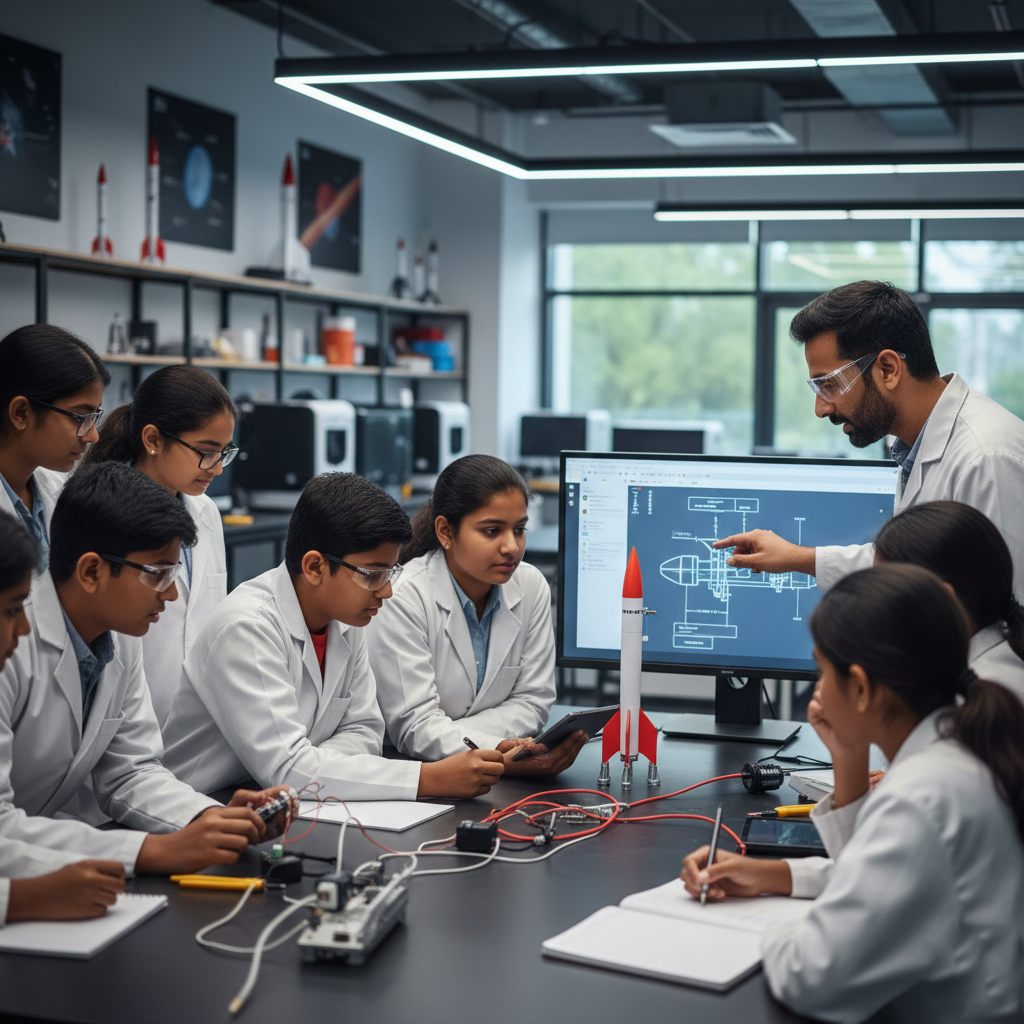
Rocketry introduces students to the design, testing, and operation of launch vehicles and propulsion systems used in space exploration and defense applications.
Through hands-on projects, learners understand how physics, engineering, and safety principles come together in real-world rocket systems.
What Students Learn
Students explore how rockets generate thrust, remain stable during flight, and safely carry payloads into space using structured engineering approaches.
This domain builds strong foundations in applied physics while reinforcing accuracy, testing, and responsible experimentation.
- rocket propulsion fundamentals
- structural engineering concepts
- safety systems and risk assessment
- engineering testing methods
- physics application in flight systems
- precision design and validation
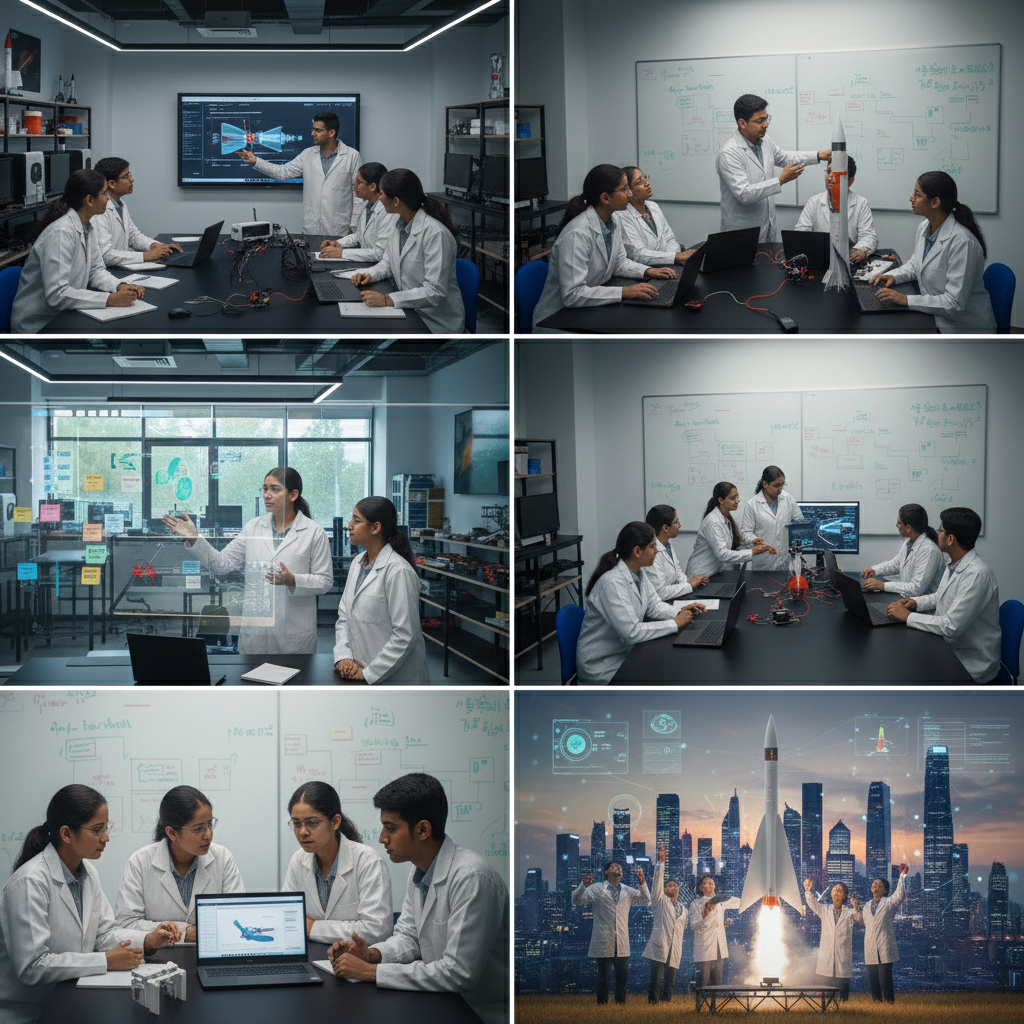
Rocketry & Student Growth
Rocketry teaches precision, safety, and perseverance. Students apply physics concepts through real launches and controlled testing environments.
Hands-on experimentation builds patience, discipline, and confidence while helping learners understand failure as part of engineering innovation.

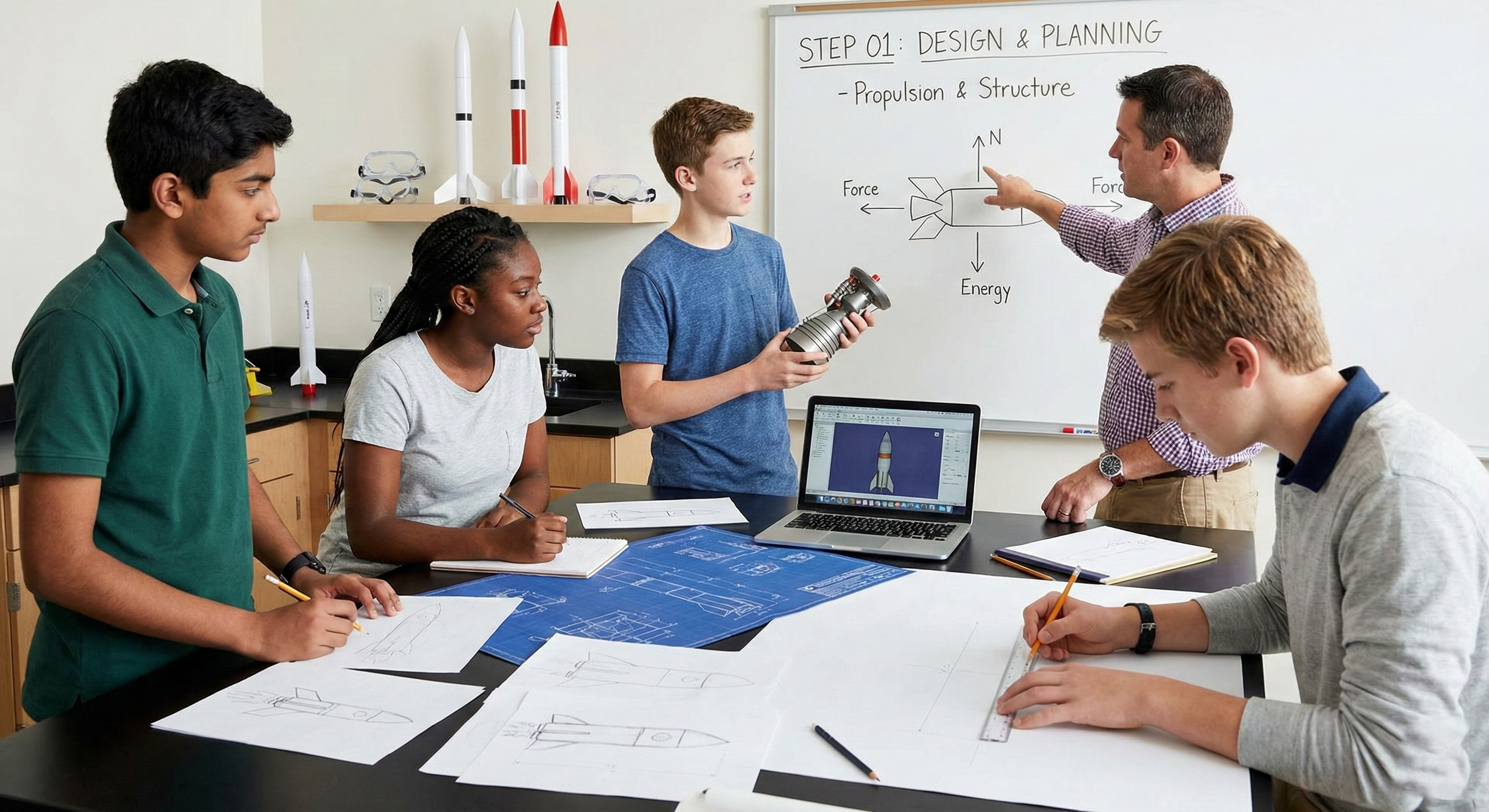
step 01
design & planning
Understanding propulsion concepts and designing safe rocket structures.

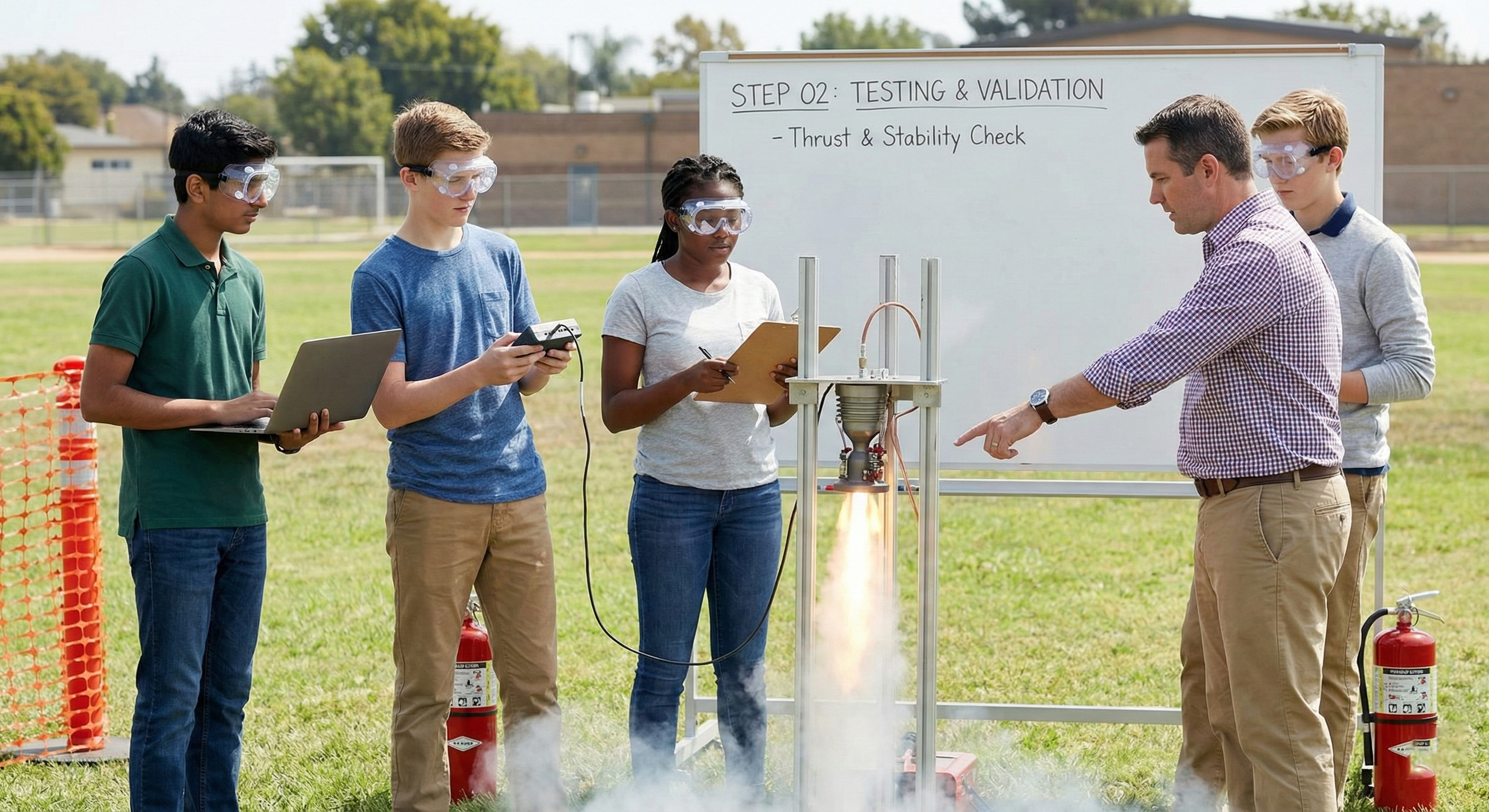
step 02
testing & validation
Conducting controlled tests to evaluate thrust, stability, and safety.

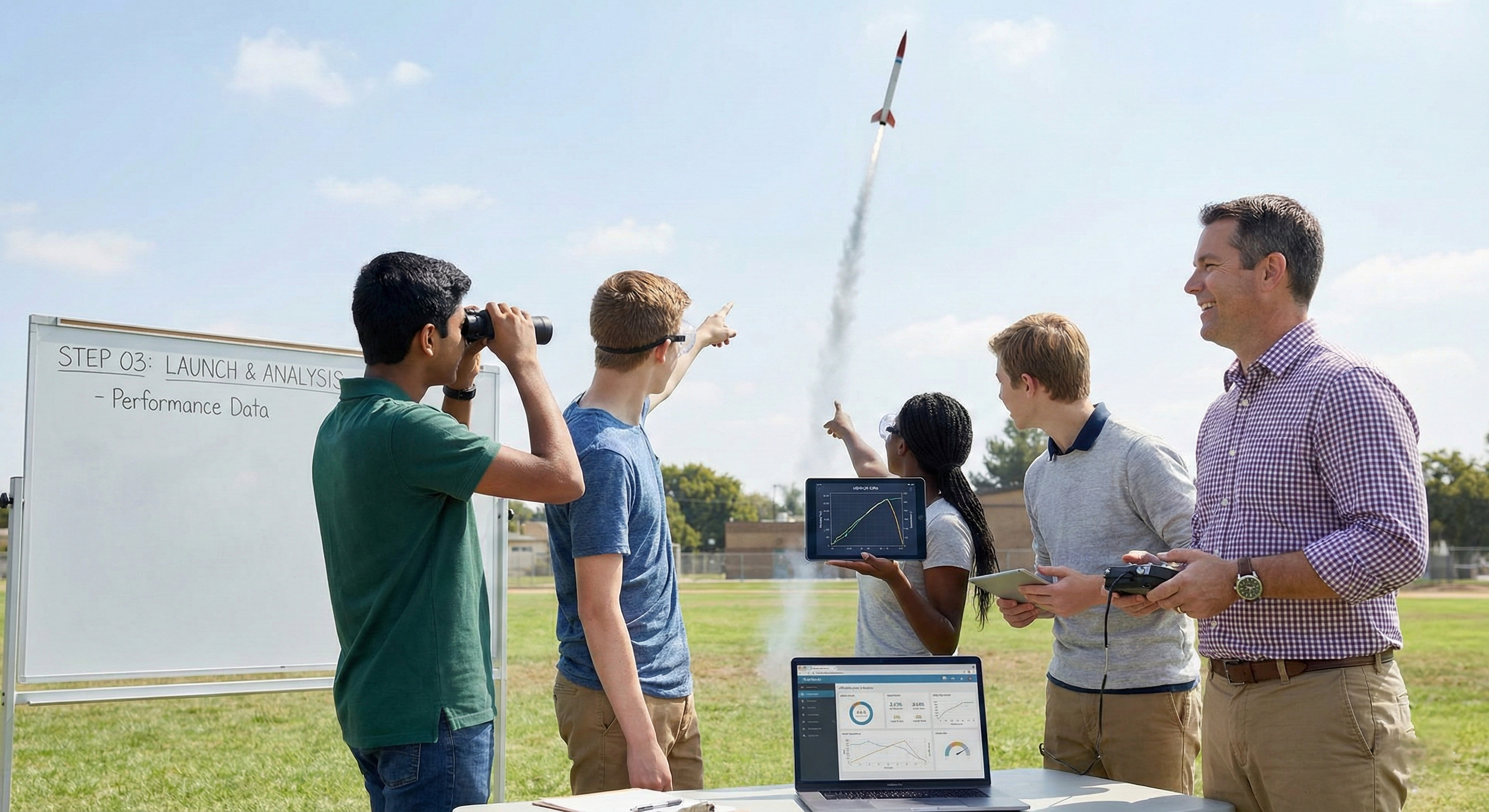
step 03
launch & analysis
Executing launches and analyzing performance data for improvement.
Lets address your questions today!
Rocketry is the science and engineering of designing, building, and launching rockets. It involves understanding propulsion systems, aerodynamics, materials, and control systems used in space exploration, satellite launches, and defense technologies.
Students learn how rockets generate thrust, how launch systems work, and how spacecraft travel beyond Earth. Rocketry combines physics, mathematics, and engineering, making it one of the most exciting and advanced fields in modern technology.
Yes, rocketry education is conducted in a safe and controlled learning environment. Students work with educational rocket models and follow strict safety protocols under expert supervision.
Safety training, proper handling procedures, and responsible engineering practices are an important part of the learning process, ensuring students understand both the science and safety aspects.
Rocketry strengthens core STEM subjects including physics, mathematics, and engineering principles. Students learn concepts such as force, motion, energy, aerodynamics, and structural design.
It also improves analytical thinking, problem-solving ability, and technical understanding, which are essential for careers in engineering, aerospace, robotics, and advanced technology fields.
Yes, rocketry develops valuable skills such as precision engineering, logical thinking, teamwork, and technical problem-solving. These skills are useful across many engineering and technology industries.
Students gain hands-on experience with real engineering concepts, preparing them for careers in robotics, mechanical engineering, electronics, defense technology, and research fields.
Rocketry opens exciting career opportunities in space exploration, aerospace engineering, satellite technology, and defense systems. Students can explore roles such as:
- Rocket Propulsion Engineer
- Space Systems Engineer
- Launch Vehicle Design Engineer
- Satellite Systems Engineer
- Aerospace Research Scientist
- Flight Dynamics Engineer
- Space Mission Engineer
- Defense Technology Engineer
- Avionics Engineer
- Space Technology Startup Founder
These careers allow students to work with space agencies, aerospace companies, research institutions, and advanced technology industries, contributing to the future of space exploration and innovation.

 +971 54475 7039