






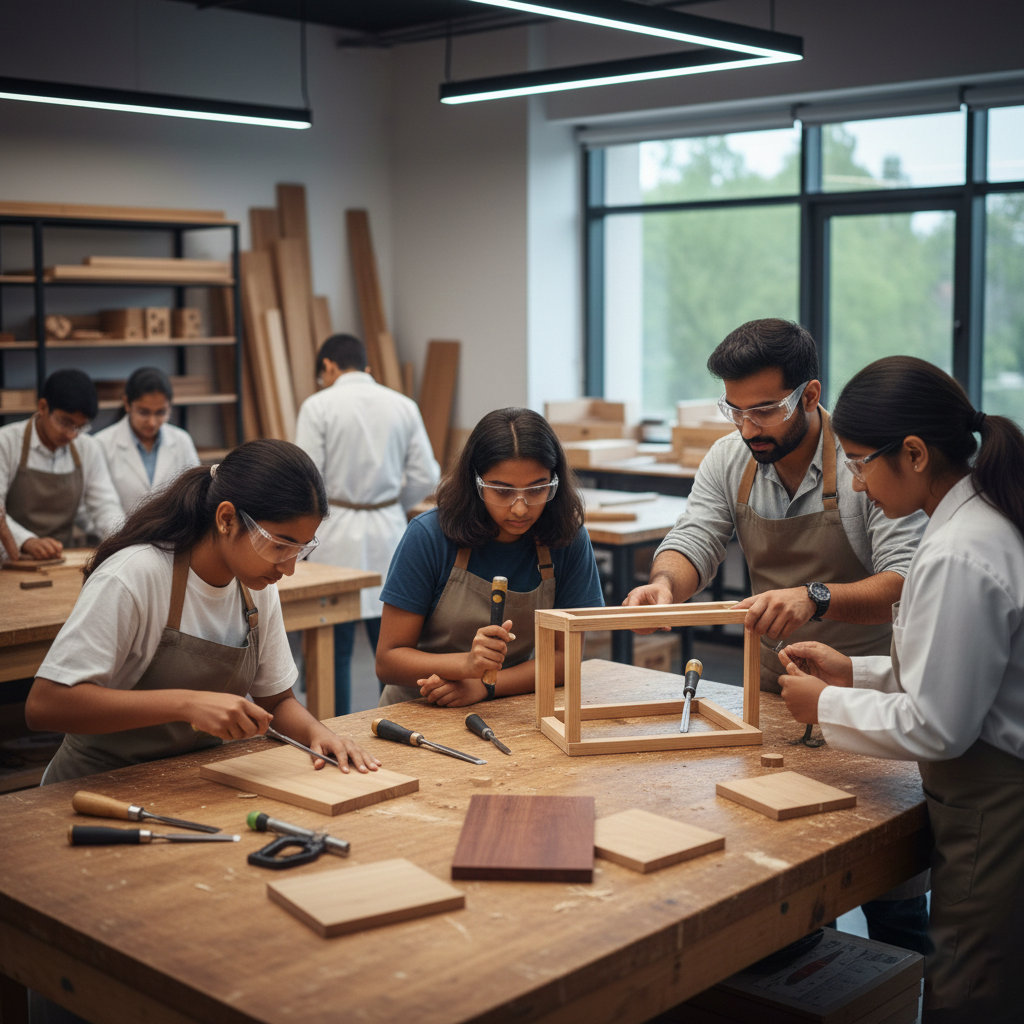
Wood Working introduces students to hands-on craftsmanship, material understanding, and applied design through meaningful creation.
By working with natural materials, learners develop patience, focus, and precision while building practical products using tools and structured planning.
What Students Learn
Students learn how raw materials are measured, shaped, and assembled into functional products using geometry, tools, and safety practices.
This domain promotes screen-free learning while strengthening spatial intelligence, creativity, and real-world problem-solving.
- measurement and applied geometry
- material science fundamentals
- tool handling and workshop safety
- precision and accuracy
- product construction techniques
- design thinking through making

Wood Working & Student Growth
Woodworking improves motor skills, spatial reasoning, and sustained focus. Students learn to plan before building and understand the value of accuracy and patience.
Hands-on creation builds confidence, craftsmanship, and safety awareness while offering a meaningful alternative to screen-based learning.

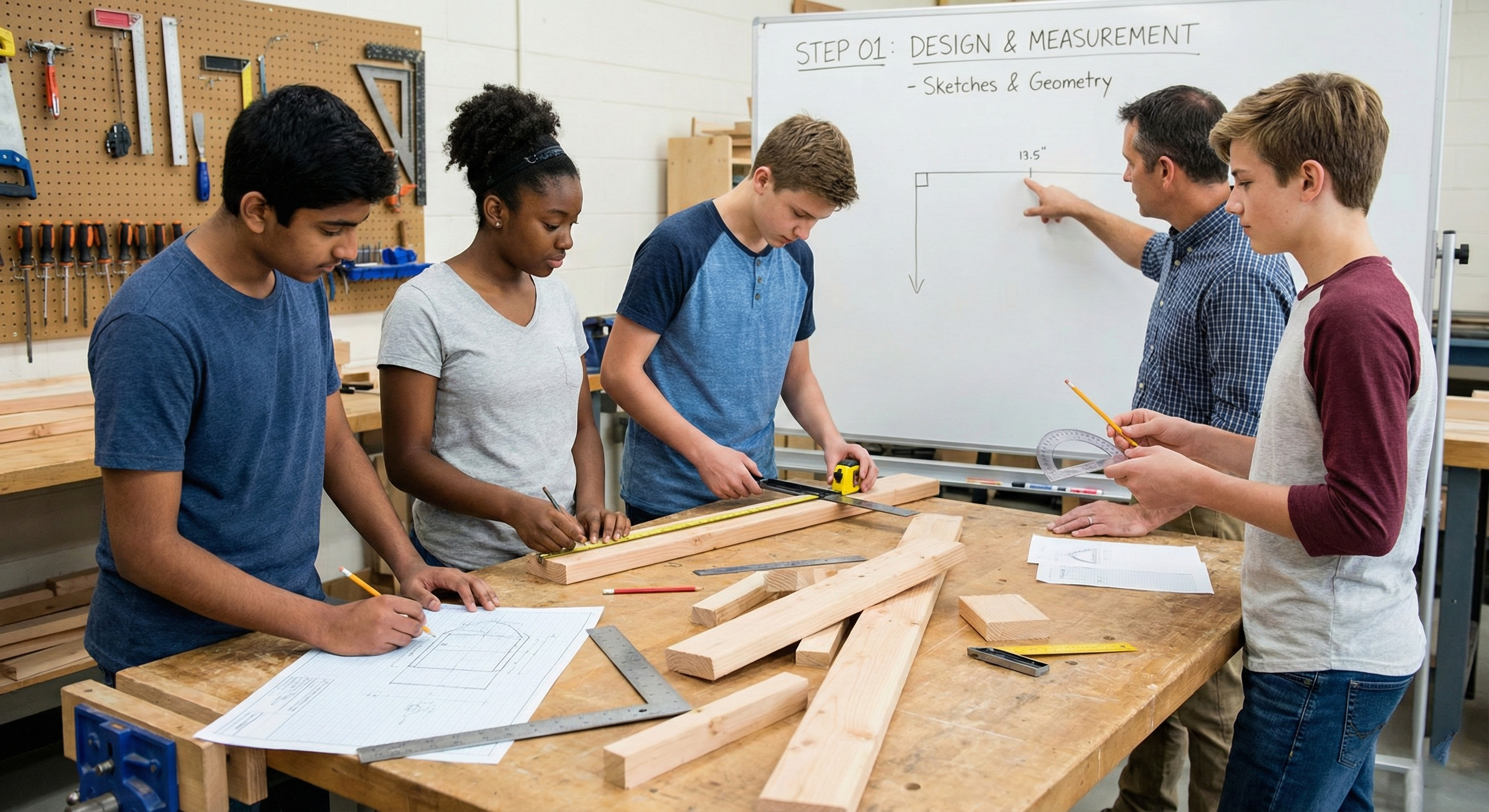
step 01
design & measurement
Planning products using measurements, sketches, and geometry.

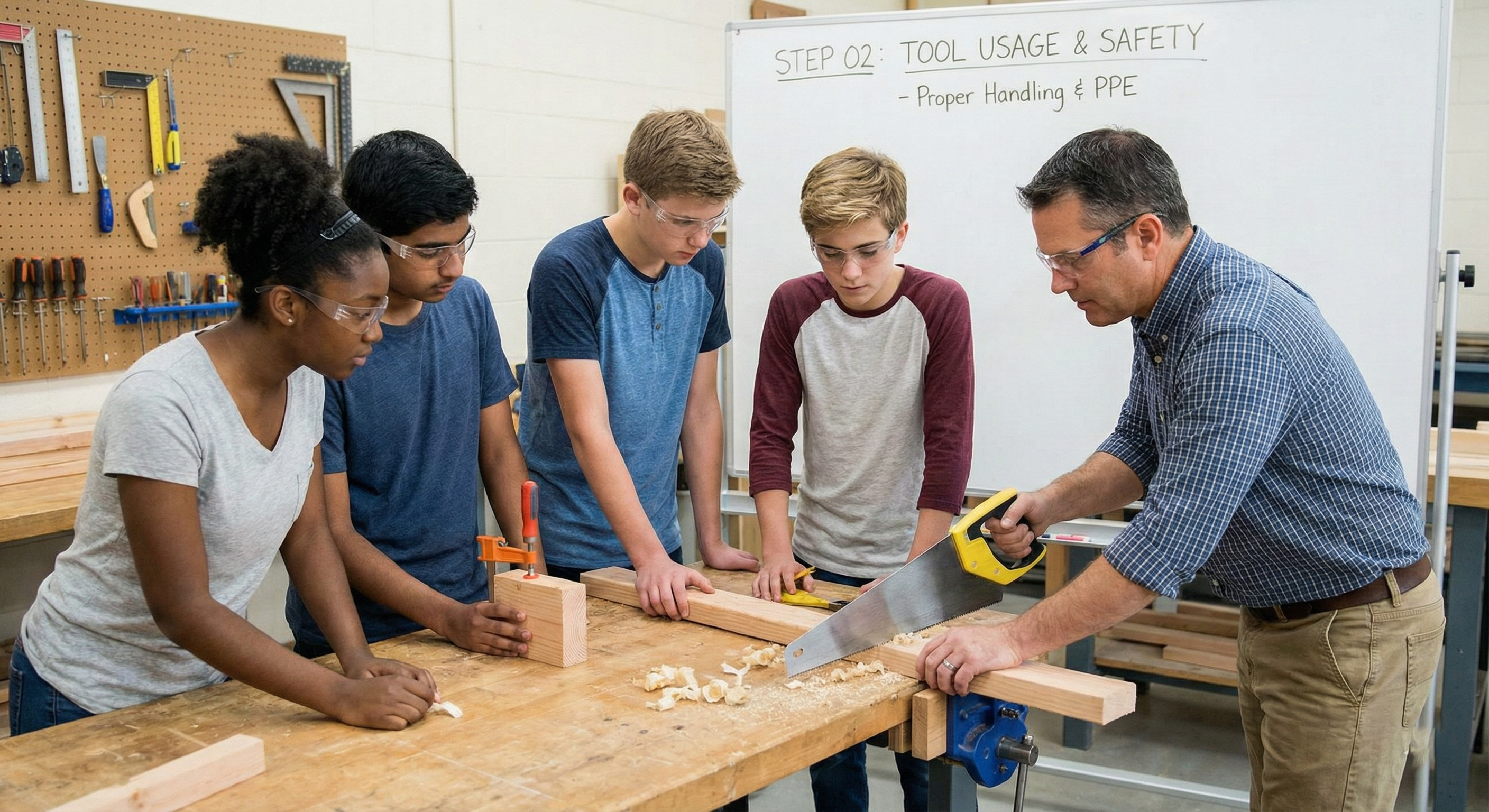
step 02
tool usage & safety
Learning proper handling of tools with a strong focus on safety.

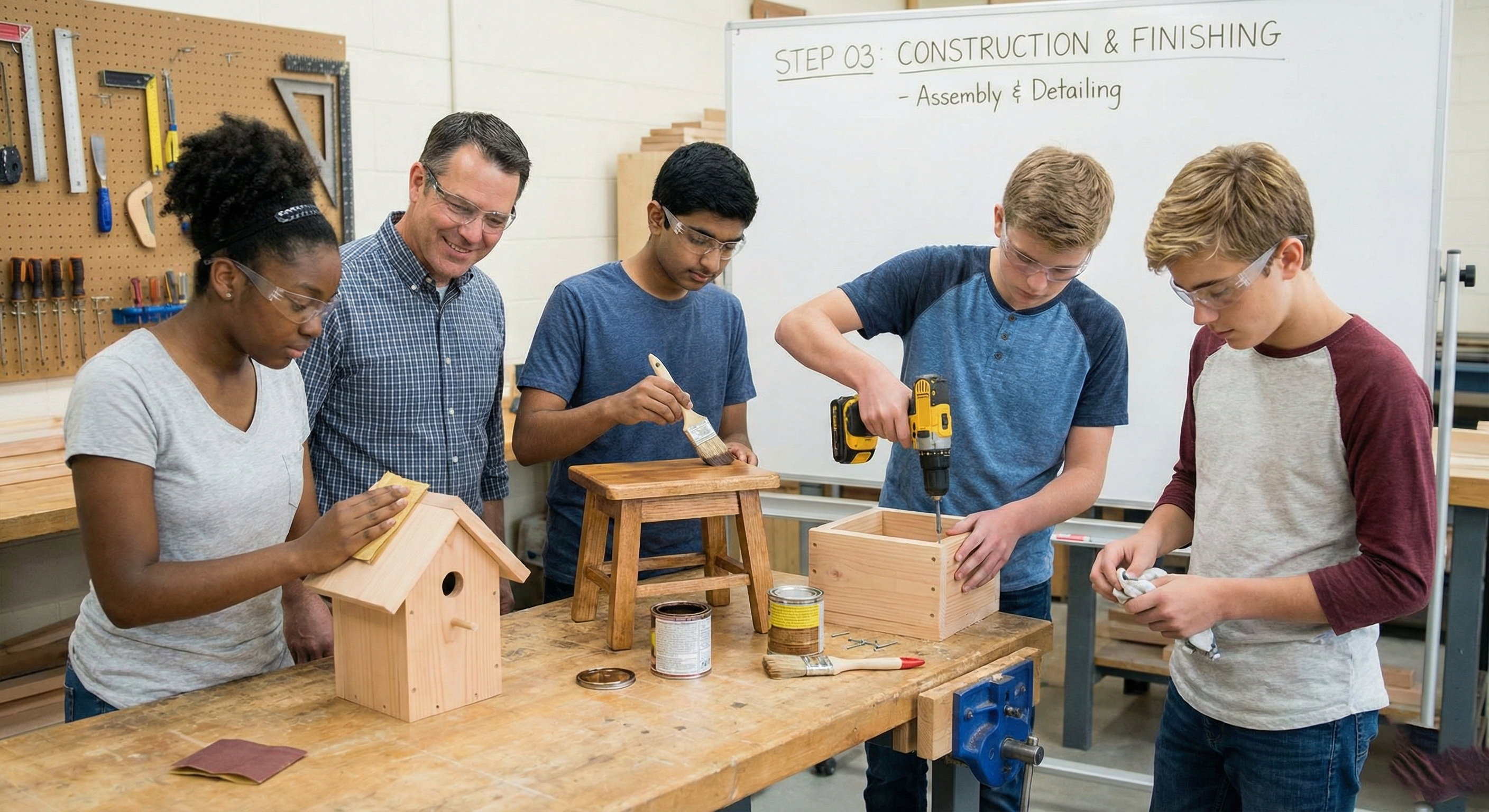
step 03
construction & finishing
Assembling, refining, and finishing products with precision.
Lets address your questions today!
Wood Working is the art and technical process of designing and creating functional or decorative products using wood. It involves measuring, cutting, shaping, assembling, and finishing wood using specialized tools and structured design methods.
Students learn craftsmanship, structural design, and material understanding, helping them transform creative ideas into real physical products. This hands-on learning builds both technical and creative confidence.
Yes, wood working programs are conducted using age-appropriate tools and strict safety guidelines. Students are trained in proper tool handling, safety procedures, and responsible workshop practices.
Supervised learning ensures students develop practical skills safely while gaining confidence and technical understanding.
Wood working develops fine motor skills, spatial intelligence, precision, focus, and craftsmanship. Students learn to work accurately with measurements, materials, and structural design.
It also strengthens creativity, engineering thinking, and problem-solving skills, which are valuable across technical, design, and creative industries.
Yes, wood working skills are highly relevant in modern careers such as product design, architecture, interior design, sustainable manufacturing, and creative entrepreneurship.
Students gain hands-on engineering and design experience, preparing them for careers that combine creativity, technology, and sustainable innovation.
Wood working promotes hands-on, screen-free learning while opening pathways to exciting creative and design careers. Students can explore roles such as:
- Sustainable Product Designer
- Set Designer (Theatre, Exhibitions)
- Furniture Technologist
- Architectural Model Maker
- Interior Styling Consultant
- Eco-Design Entrepreneur
- Toy Designer
- Packaging & Display Designer
- Restoration & Conservation Specialist
- Craft Brand Founder (D2C)
These careers allow students to work in design studios, architecture firms, creative industries, manufacturing companies, and entrepreneurial ventures. Wood working also empowers students to create their own products and build successful creative businesses.

 +971 54475 7039