






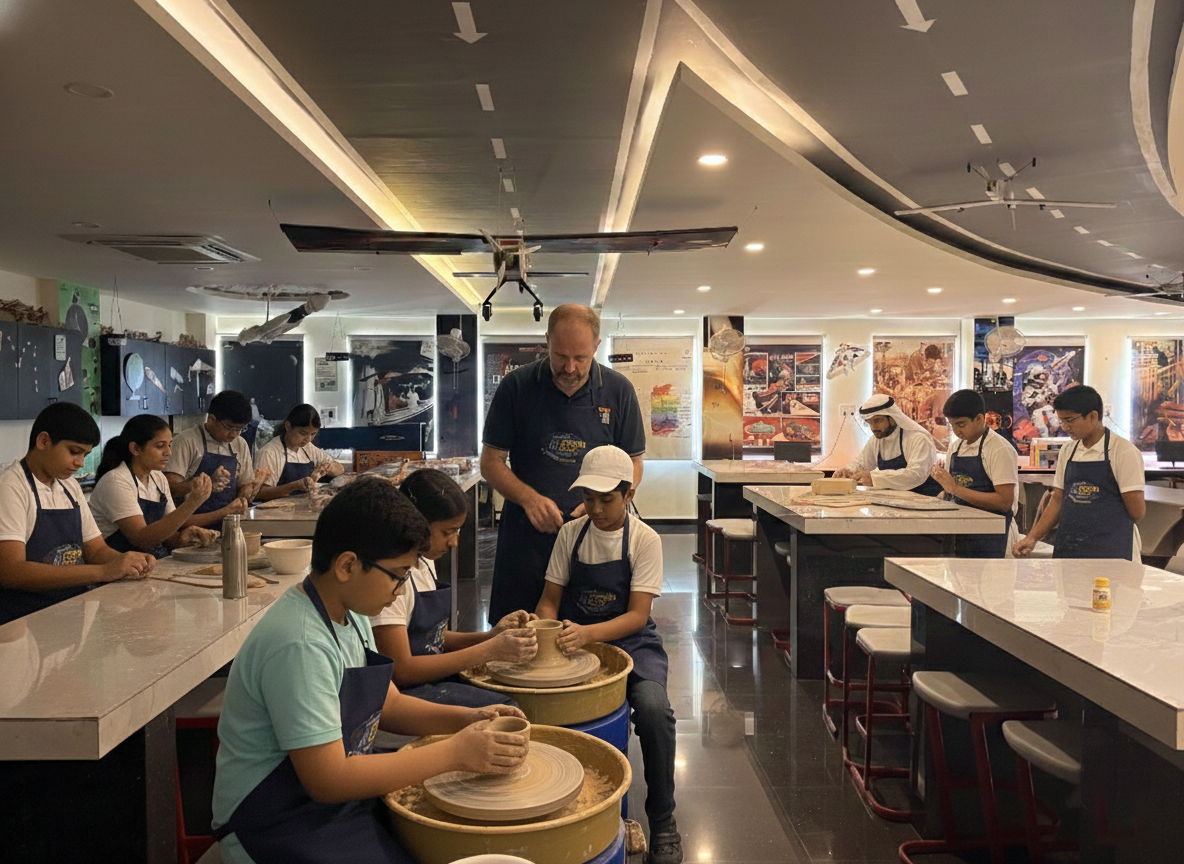
Pottery blends creative expression with material understanding, allowing students to explore ideas through hands-on work with clay.
By shaping and forming clay, learners develop focus, patience, and coordination while gaining confidence in their creative abilities.
What Students Learn
Students understand how materials behave under pressure, moisture, and form while expressing ideas through tactile creation.
Pottery encourages mindfulness and experimentation, helping students slow down and engage deeply with the creative process.
- clay science and material behavior
- form, structure, and balance
- hand-eye coordination
- creative techniques and expression
- patience and attention to detail
- artistic confidence
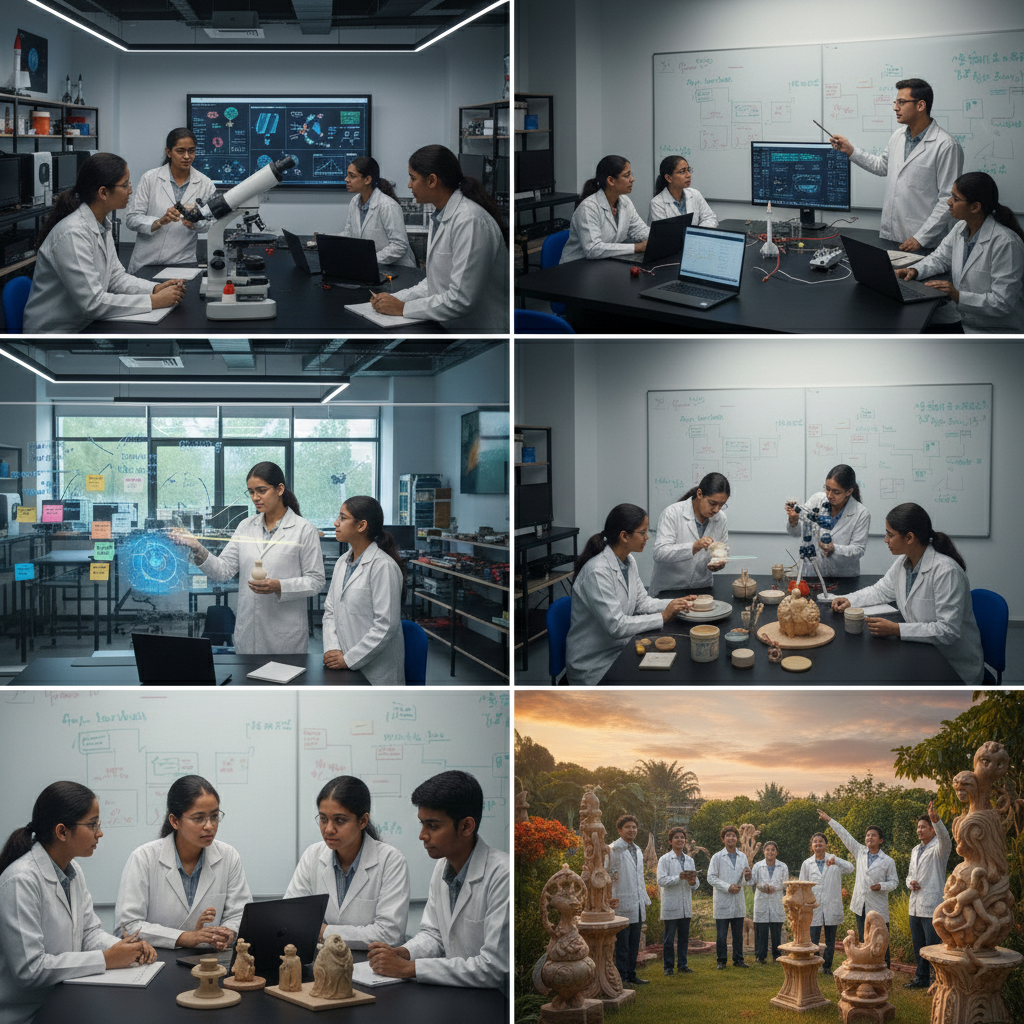
Pottery & Student Growth
Pottery supports creativity and emotional expression. Working with clay improves coordination, patience, and fine motor skills.
The process encourages mindfulness and calm focus, helping students build confidence while expressing ideas in a tangible form.

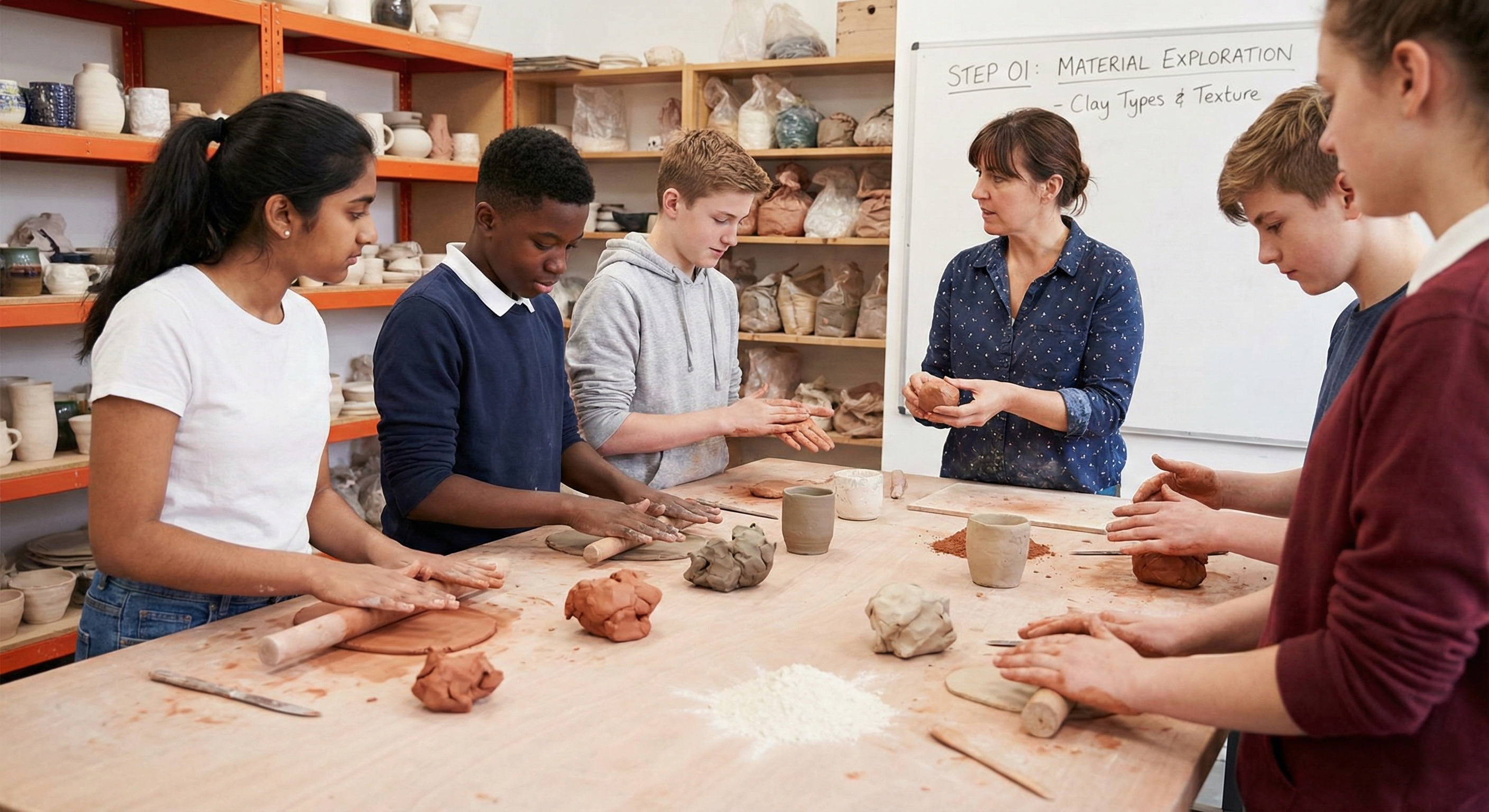
step 01
material exploration
Understanding clay types, texture, and moisture behavior.

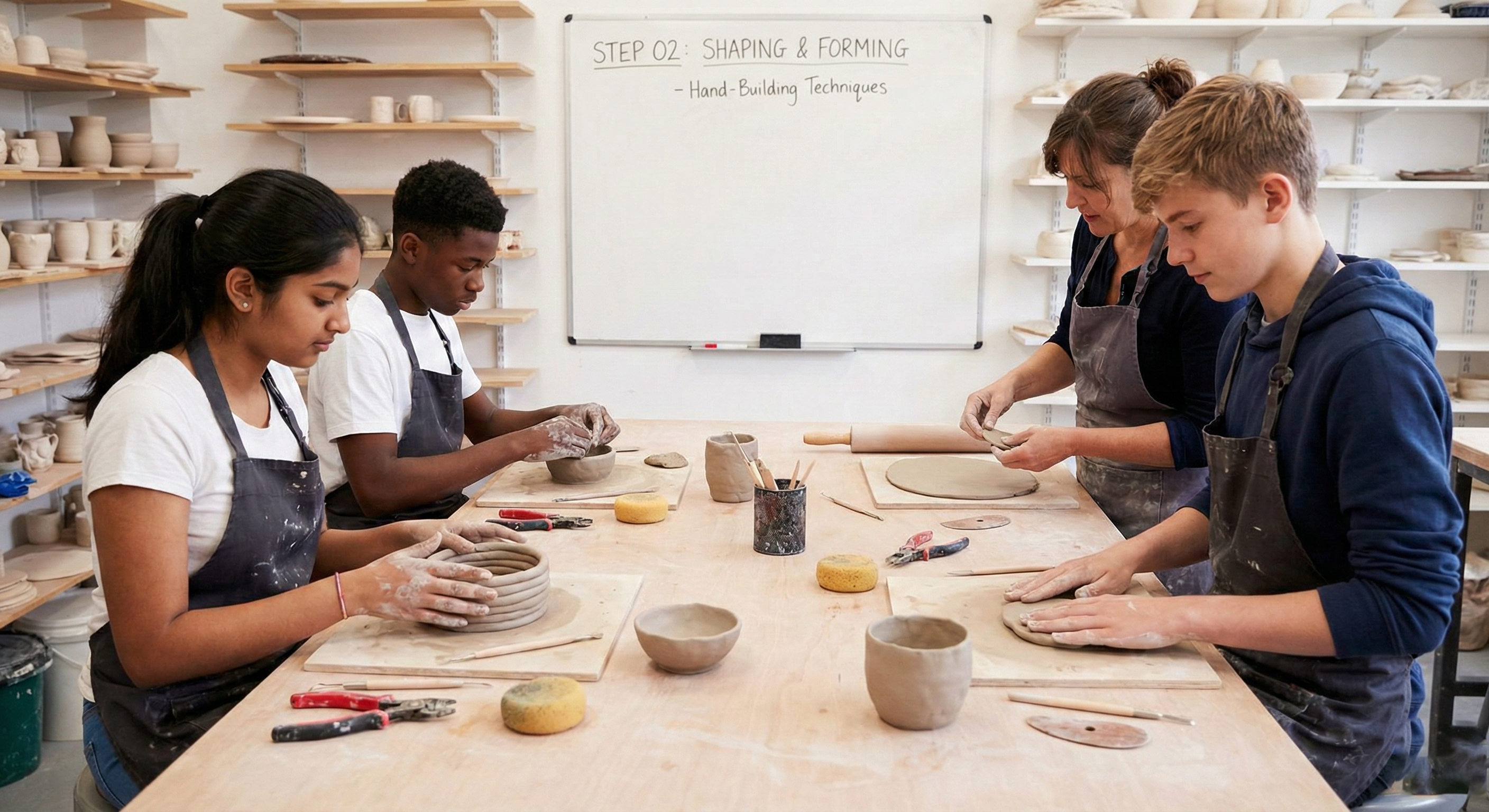
step 02
shaping & forming
Creating forms using hand-building and basic shaping techniques.

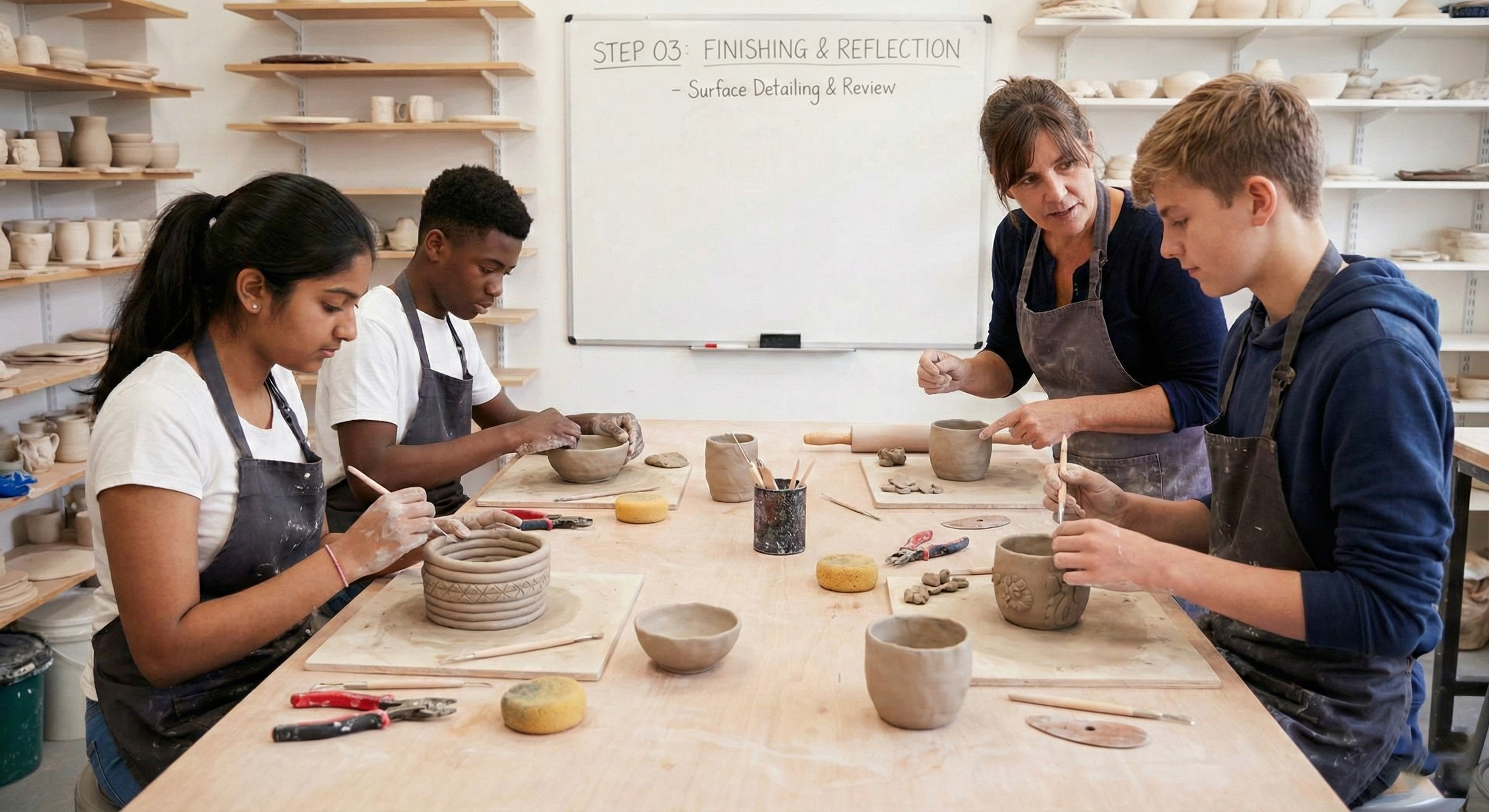
step 03
finishing & reflection
Refining designs, surface detailing, and reflecting on the creative outcome.
Lets address your questions today!
Pottery is the art and craft of creating functional and decorative objects using clay. It involves shaping clay by hand or on a pottery wheel and then hardening it through firing in a kiln to create durable ceramic products.
Pottery combines creativity, craftsmanship, and technical skill. Students learn how to design, shape, and finish clay objects, helping them express their creativity while understanding materials and artistic techniques.
Yes, pottery is suitable for beginners of all ages. Students start with basic techniques such as hand-building, shaping, and simple pottery wheel usage under guided instruction.
The learning process is gradual and enjoyable, allowing students to develop skills at their own pace while building confidence and creative expression.
Pottery helps develop creativity, hand-eye coordination, patience, and fine motor skills. Students learn to work with materials carefully and transform ideas into physical objects.
It also improves focus, problem-solving ability, and artistic thinking, which are valuable skills in both creative and professional fields.
Working with clay encourages mindfulness, relaxation, and emotional expression. The hands-on creative process helps students focus, reduce stress, and develop a sense of accomplishment.
Pottery also builds patience, resilience, and confidence as students learn through experimentation and creative exploration.
Pottery opens career opportunities in art, design, creative industries, and entrepreneurship. Students can explore roles such as:
- Ceramic Product Designer (Home Décor, Hospitality)
- Surface Pattern Designer
- Art & Design Educator
- Creative Workshop Facilitator
- Craft Business Owner (Online or Studio Brand)
- Museum Collection Assistant
- Cultural Heritage & Craft Specialist
- Creative Director (Craft Brands)
- Wellness & Creative Therapy Practitioner
- Studio Manager
These careers allow students to work in design studios, creative businesses, museums, education, and entrepreneurship. Pottery skills also enable students to start their own craft brands and build successful creative careers.

 +971 54475 7039