






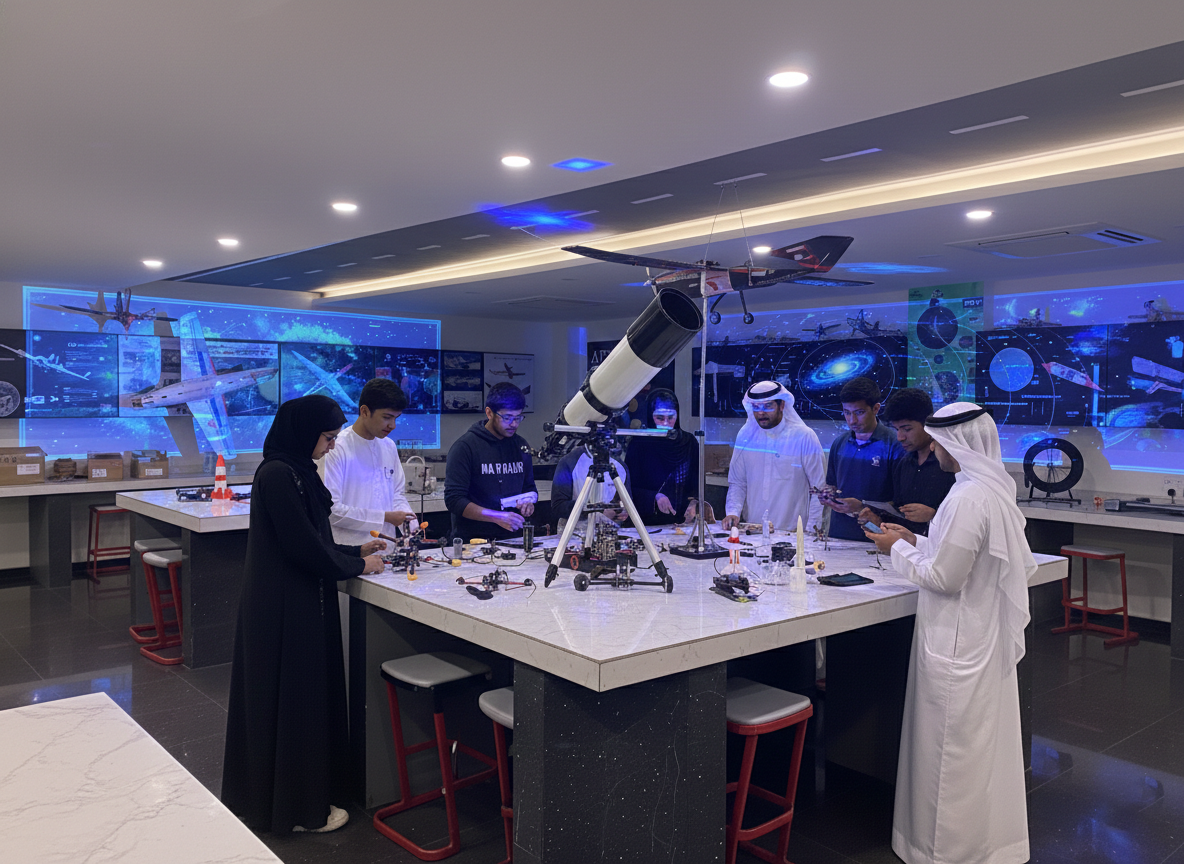
Astronomy introduces students to the scientific exploration of the universe through observation, research, and inquiry-based learning. By studying celestial objects and space phenomena, students develop curiosity, analytical thinking, and a deeper understanding of Earth’s place in the cosmos.
This domain inspires lifelong learning and scientific discipline while building strong foundations for careers in space research, physics, and academic sciences.
What Students Learn
Students learn how scientists study space using observation, data collection, and research methods. Astronomy builds patience, accuracy, and analytical thinking.
Through real scientific practices, learners develop an appreciation for discovery and evidence-based reasoning.
- scientific observation techniques
- data analysis and interpretation
- research methodology
- scientific inquiry and hypothesis testing
- critical and analytical thinking
- understanding cosmic systems
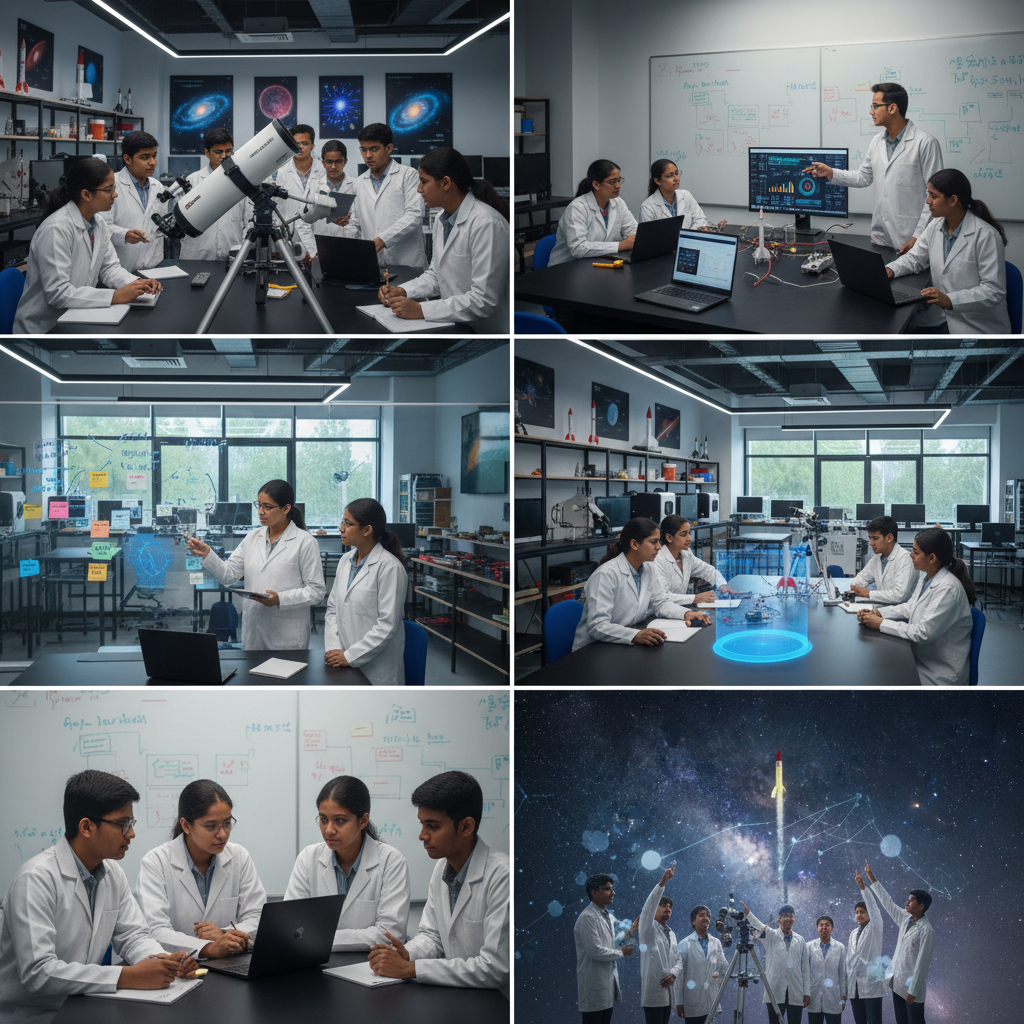
Astronomy & Student Growth
Astronomy encourages curiosity, observation, and scientific inquiry. Students learn to ask meaningful questions and search for evidence-based answers.
By exploring space science, learners gain long-term motivation, discipline, and a deeper appreciation for science and lifelong learning.

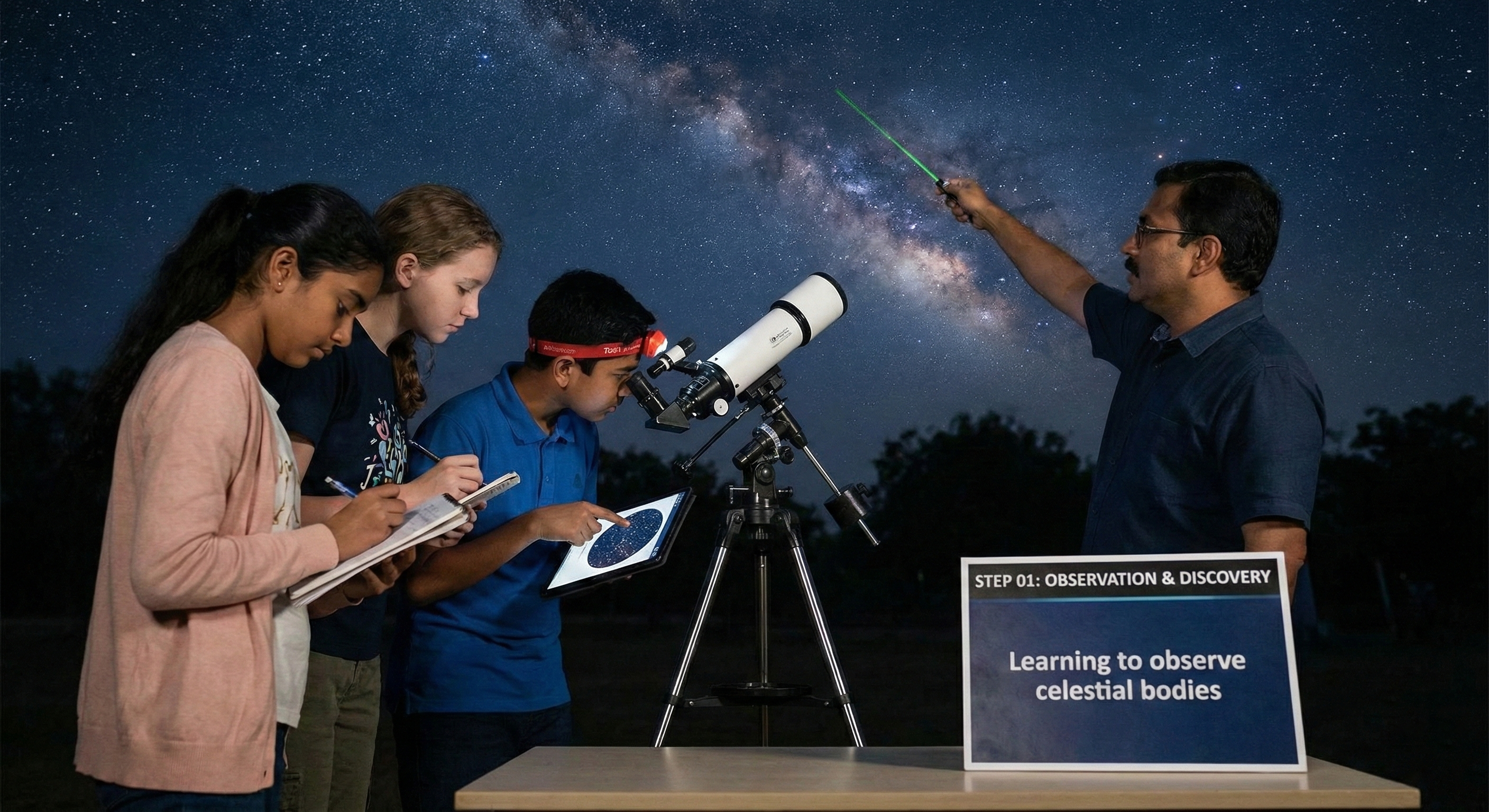
step 01
observation & discovery
Learning how to observe celestial bodies and record scientific data.

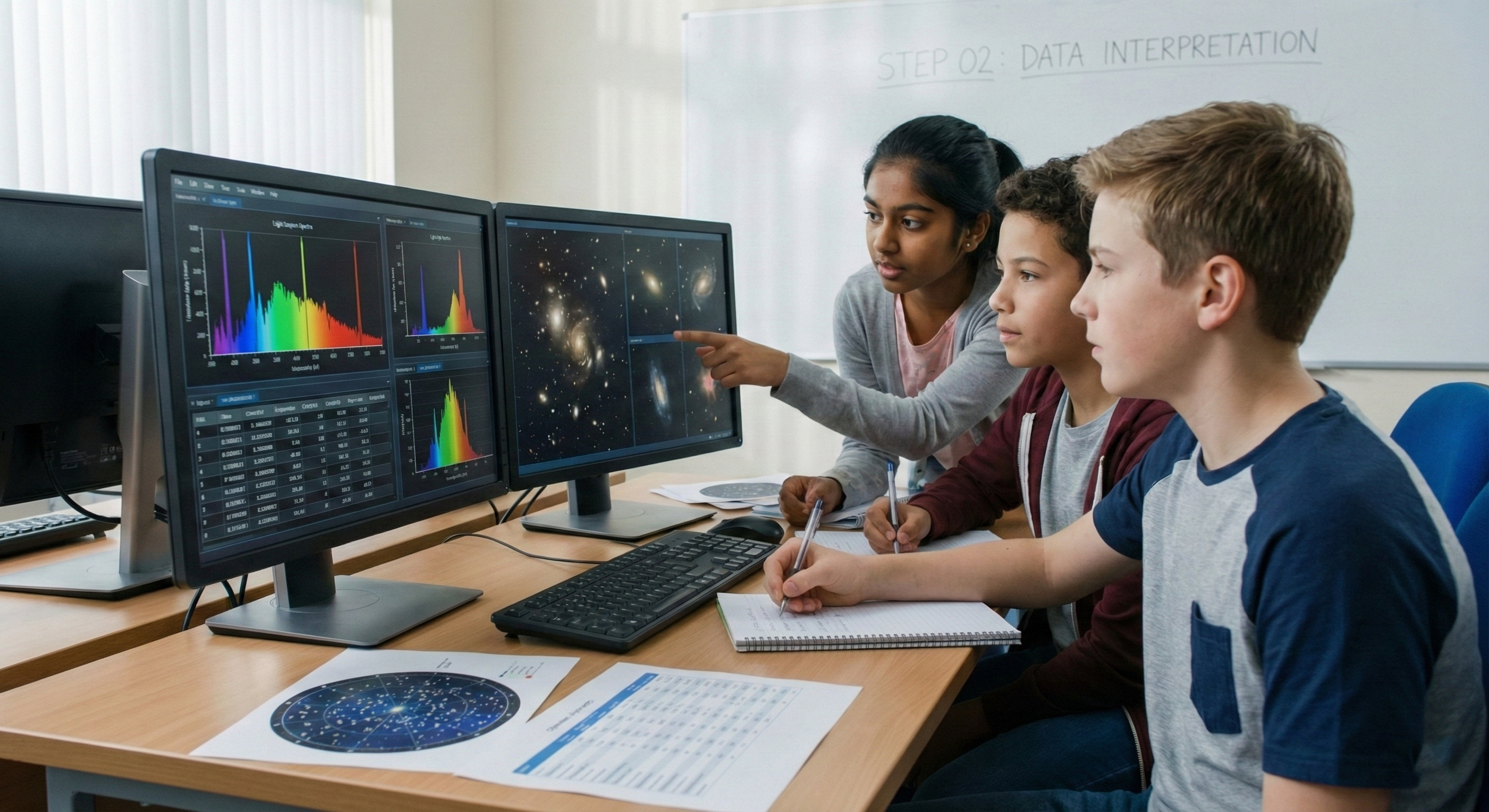
step 02
data interpretation
Analyzing space data to identify patterns and scientific relationships.

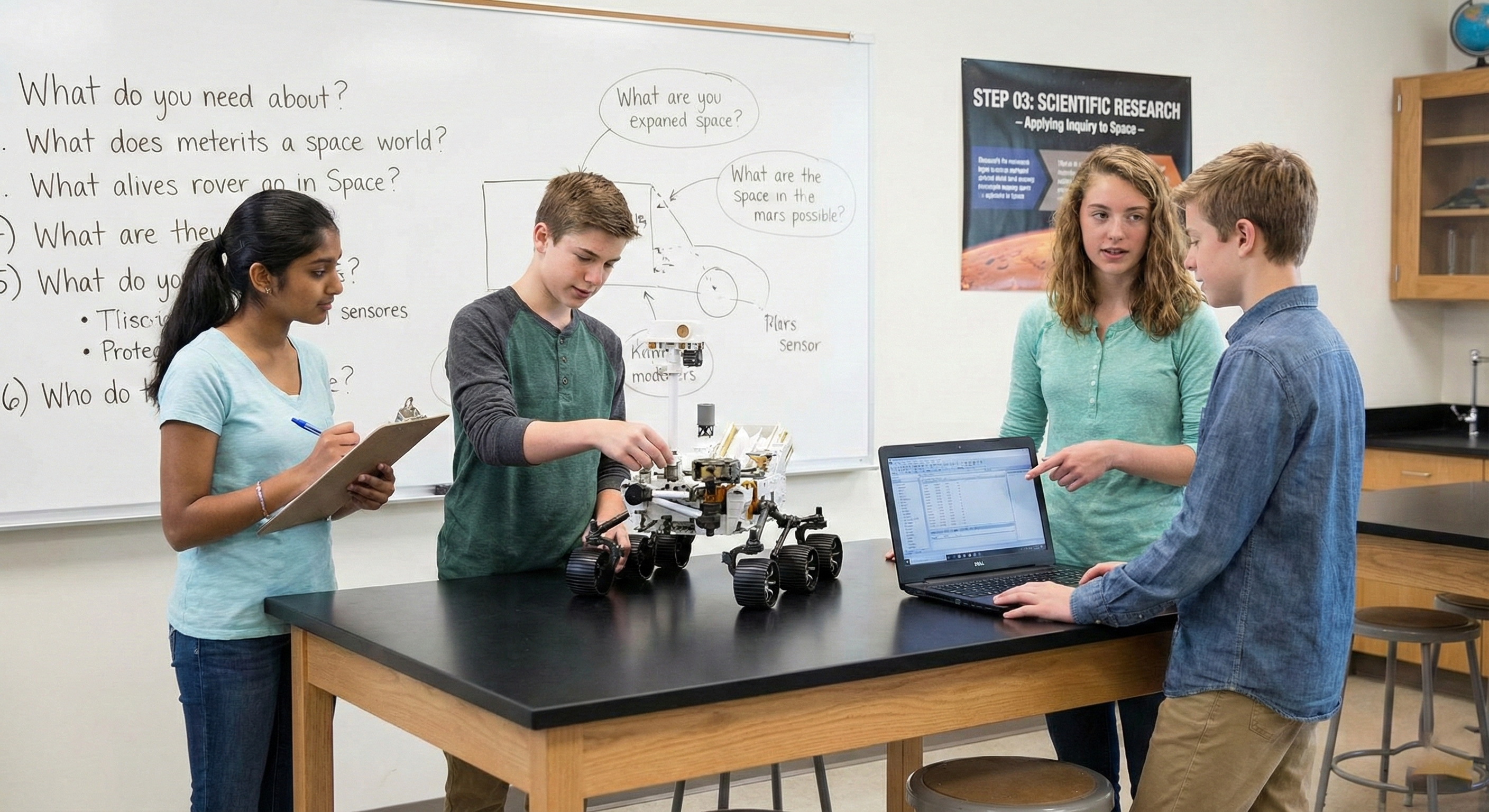
step 03
scientific research
Applying inquiry methods to explore space-related questions.
Lets address your questions today!
Astronomy is the scientific study of the universe and everything within it, including stars, planets, moons, galaxies, nebulae, black holes, and other cosmic phenomena. It helps us understand how celestial objects form, evolve, and interact over time.
Through astronomy, students explore fascinating questions such as how stars are born, how planets orbit, and how space missions explore distant worlds. It combines concepts from physics, mathematics, and observation to explain the structure and behavior of the universe in a clear and engaging way.
Students do not need advanced math or physics to begin learning astronomy. The subject is introduced in a simple and gradual manner, starting with basic concepts such as the solar system, stars, and visible celestial objects.
As students progress, they naturally develop stronger analytical and scientific thinking skills. Complex topics are explained using visual demonstrations, practical examples, and real-world applications, making learning accessible and enjoyable for students at all levels.
Astronomy strengthens essential academic skills such as observation, logical reasoning, data analysis, and scientific thinking. Students learn to observe patterns, interpret information, and understand how scientific principles apply to real-world phenomena.
It also improves their understanding of physics and mathematics by showing how these subjects are used in real space systems. This enhances academic confidence and prepares students for future studies in science, engineering, and technology-related fields.
Yes, astronomy develops valuable transferable skills such as critical thinking, research ability, data interpretation, and problem-solving. These skills are useful not only in science careers but also in fields like data science, software development, research, education, and technology.
Astronomy also encourages curiosity, creativity, and a deeper understanding of the world, helping students become more analytical thinkers and better problem-solvers in any career path they choose.
Astronomy opens pathways to exciting careers in space research, data science, education, and advanced technology sectors. Students can explore roles such as:
- Space Data Scientist
- Planetary Geologist
- Remote Sensing Analyst
- Space Mission Data Analyst
- Science Communicator / Content Creator
- Space Museum Curator
- Observatory Operations Manager
- Scientific Software Developer
- Space Education Program Manager
- Astro-Visualization Specialist
These careers allow students to work with space agencies, research institutions, observatories, technology companies, and educational organizations. The skills learned in astronomy also apply to data science, artificial intelligence, software development, and research-driven industries.

 +971 54475 7039