







Coding & Artificial Intelligence introduce students to the foundations of programming and intelligent systems that power modern technology. Learners understand how software is built and how machines make intelligent decisions.
This domain strengthens logical reasoning and computational thinking, preparing students for a future shaped by automation, data, and artificial intelligence.
What Students Learn
Students learn how code works behind applications, websites, and intelligent systems. They develop the ability to think step-by-step and translate ideas into working programs.
By exploring AI fundamentals, learners gain insight into how machines learn, adapt, and assist humans in solving complex problems.
- programming logic and syntax
- algorithmic thinking
- problem decomposition
- AI fundamentals and applications
- logical and computational reasoning
- real-world software problem solving

Coding & AI Learning Path
The Coding & AI learning path helps students move from basic programming concepts to understanding intelligent systems that power modern software and automation.

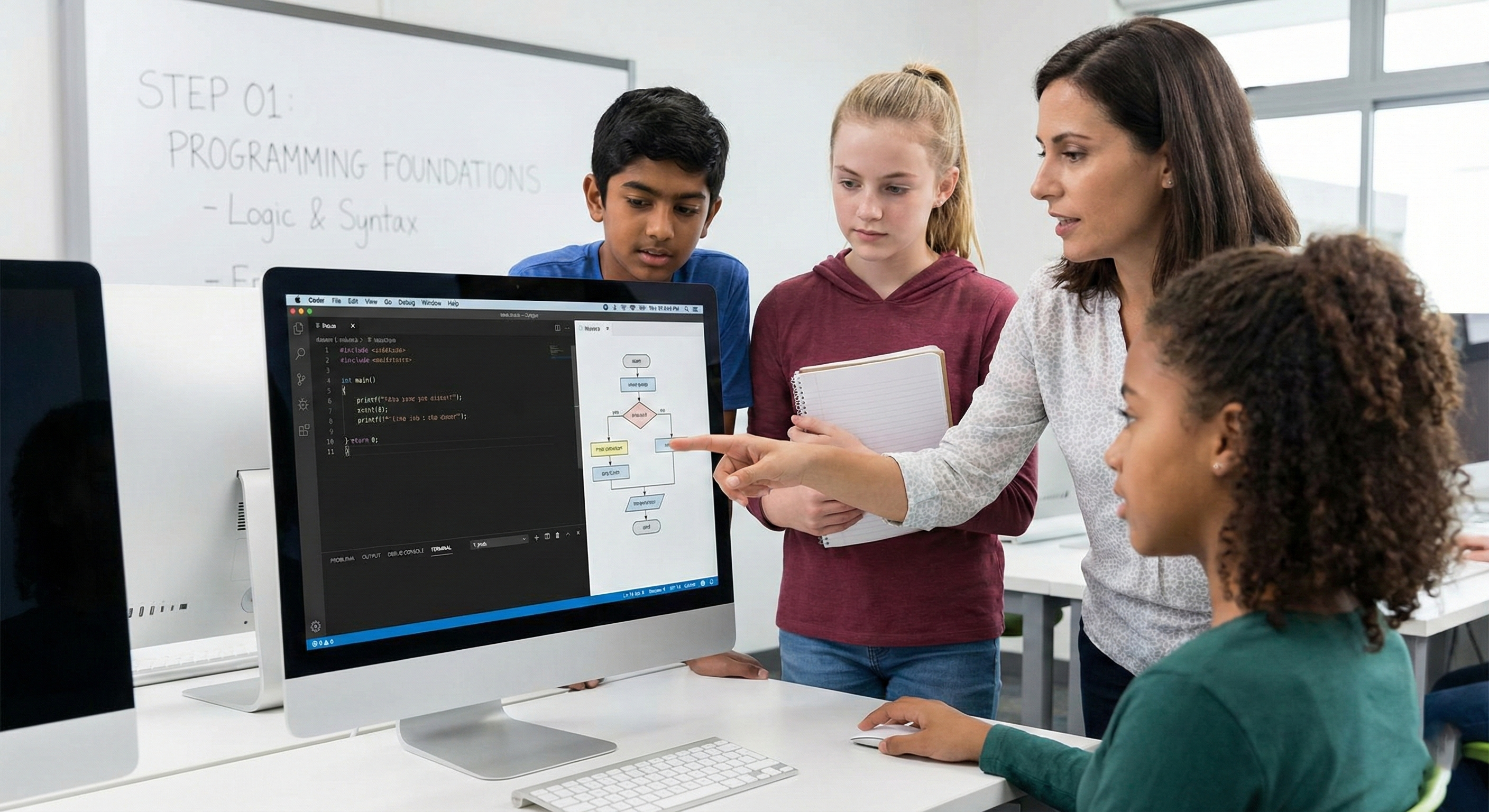
step 01
programming foundations
Understanding logic, syntax, and how programs are structured.

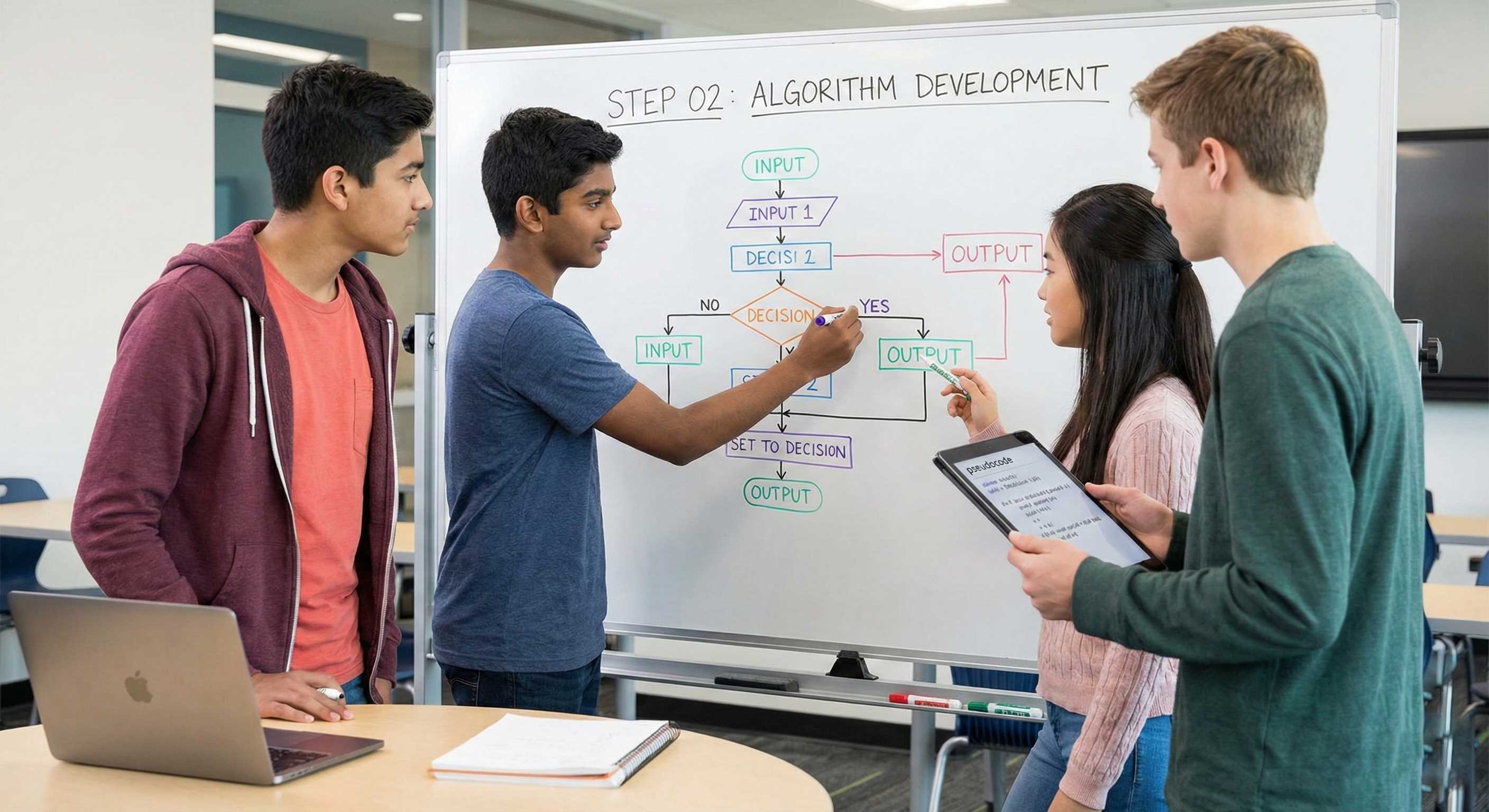
step 02
algorithm development
Breaking complex problems into clear, logical steps.

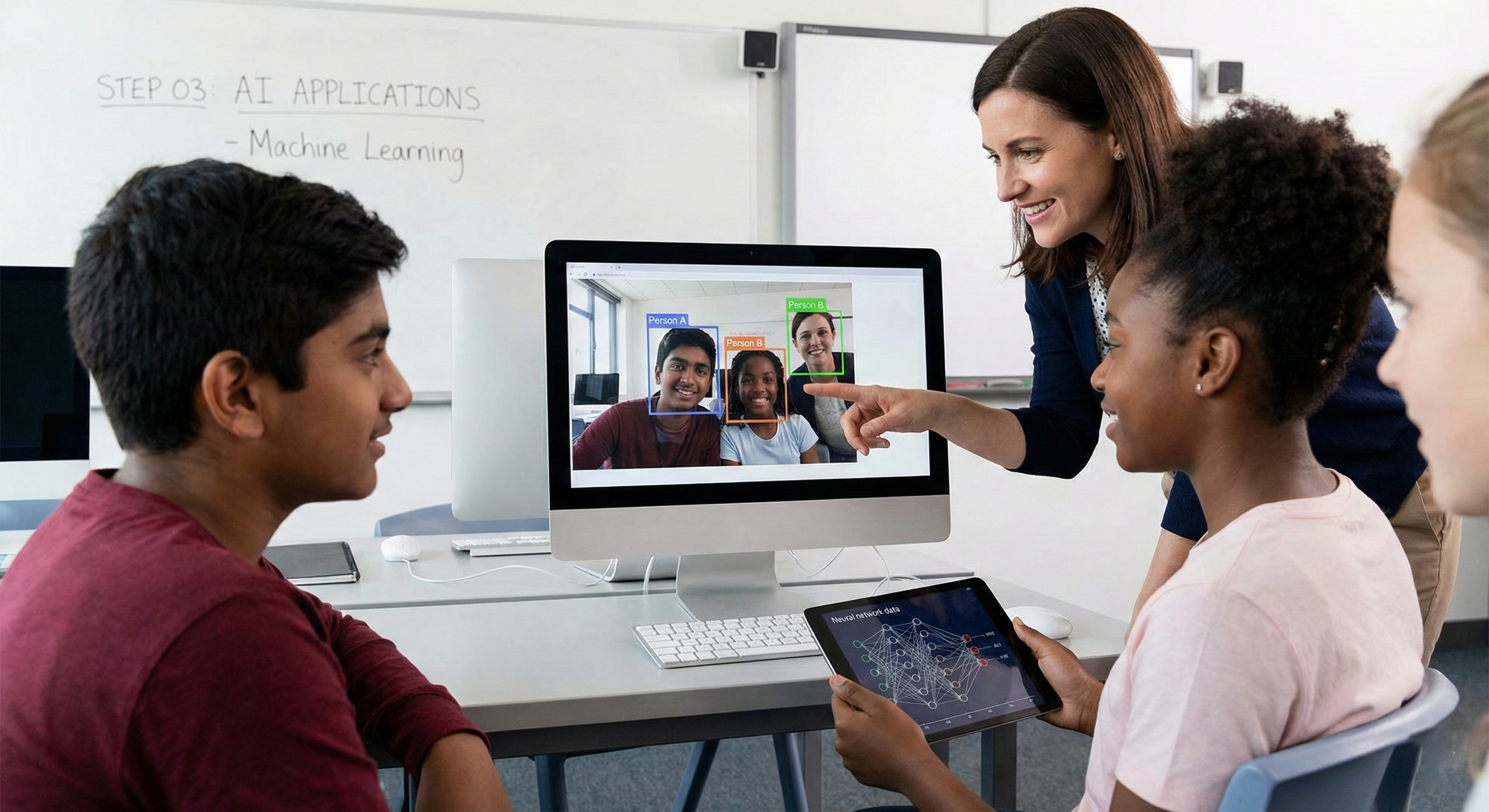
step 03
AI applications
Exploring how artificial intelligence enhances software systems.
Lets address your questions today!
Coding & Artificial Intelligence (AI) combines programming skills with intelligent technologies that enable computers to perform tasks such as learning, decision-making, problem-solving, and automation. Coding is the foundation that allows students to create software, websites, apps, and digital systems, while AI adds the capability to build smart applications that can analyze data and improve performance over time.
Students learn how modern technologies like chatbots, recommendation systems, automation tools, and smart applications work. This helps them understand not only how to use technology, but also how to create and innovate with it.
No prior coding experience is required. Students begin with fundamental concepts such as logic, problem-solving, and basic programming structures. The learning process is gradual and designed to suit beginners.
As students progress, they learn to build real projects such as simple apps, automation tools, and AI-based solutions. This step-by-step approach ensures students gain confidence and develop strong technical skills over time.
AI strengthens important academic skills such as logical thinking, analytical reasoning, and structured problem-solving. Students learn how to break complex problems into smaller steps and develop efficient solutions.
It also improves their understanding of mathematics, algorithms, and data analysis. These skills enhance academic performance and prepare students for higher education and future careers in technology and innovation.
Yes, Coding & AI skills are valuable across all career fields. They help students develop structured thinking, digital literacy, and the ability to work with modern technology.
Even in non-technical careers such as business, healthcare, design, finance, and marketing, technology plays a major role. Understanding coding and AI helps students adapt to digital environments and gives them a competitive advantage in any profession.
Coding & AI skills are used across almost every modern industry including technology, healthcare, finance, education, automation, research, and startups. Students can explore exciting career roles such as:
- Full-Stack Developer
- Cloud Engineer
- DevOps Engineer
- Cybersecurity Analyst
- AI Product Manager
- Prompt Engineer (AI Interaction Design)
- Tech Solutions Architect
- Automation Consultant
- Digital Transformation Specialist
- Tech Startup Founder
These careers allow students to work in leading technology companies, startups, research organizations, and global industries. Coding & AI skills also enable students to build their own software products, launch startups, and contribute to future innovations.

 +971 54475 7039