






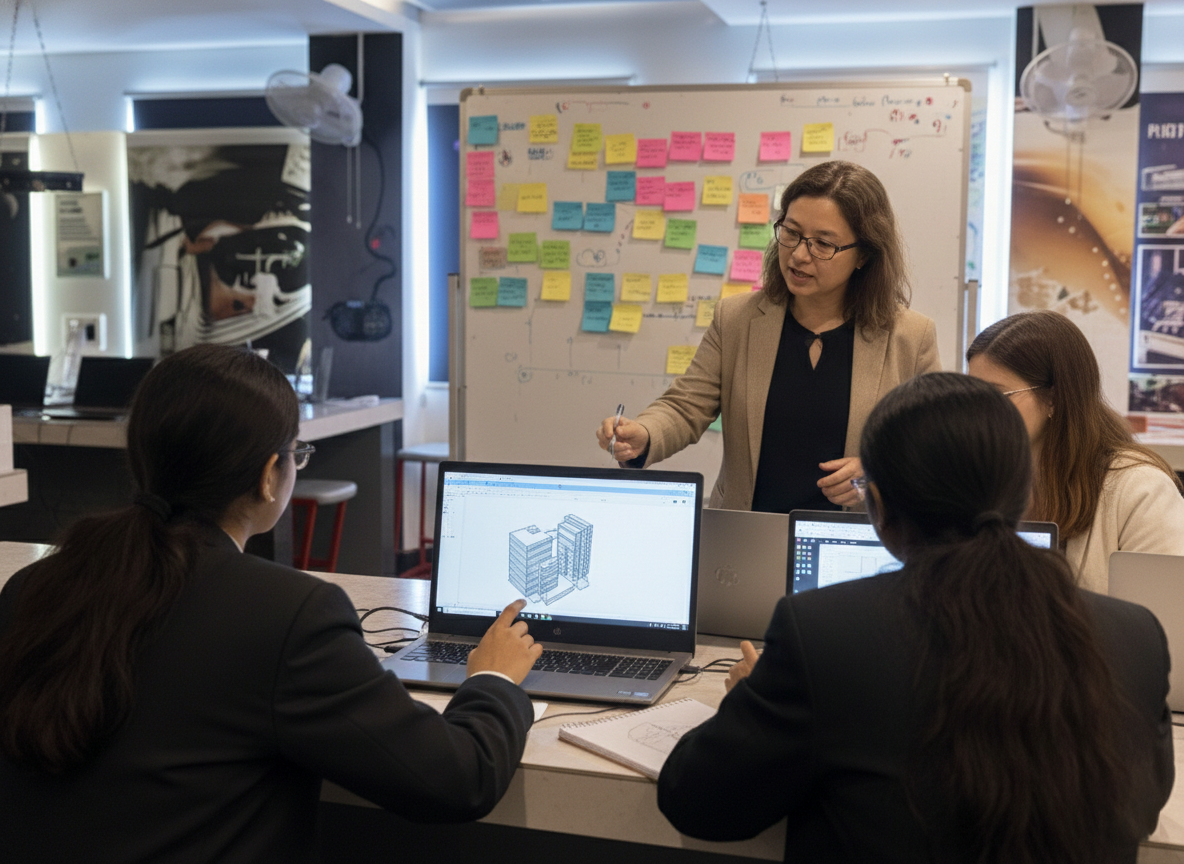
Design Thinking trains students to solve problems creatively by focusing on empathy, collaboration, and innovation. Learners approach challenges from a human-centered perspective rather than relying only on technical solutions.
Students build resilience by understanding that failure is a natural part of the innovation process. This mindset strengthens confidence, adaptability, and teamwork skills.
What Students Learn
Design Thinking equips students with structured creativity. They learn how to identify real problems, understand user needs, and develop innovative solutions through experimentation.
The learning process encourages curiosity, teamwork, and iterative improvement, preparing students for real-world challenges.
- creative problem-solving techniques
- empathy-driven user research
- idea generation and brainstorming
- prototype development
- testing and iteration
- collaborative teamwork skills
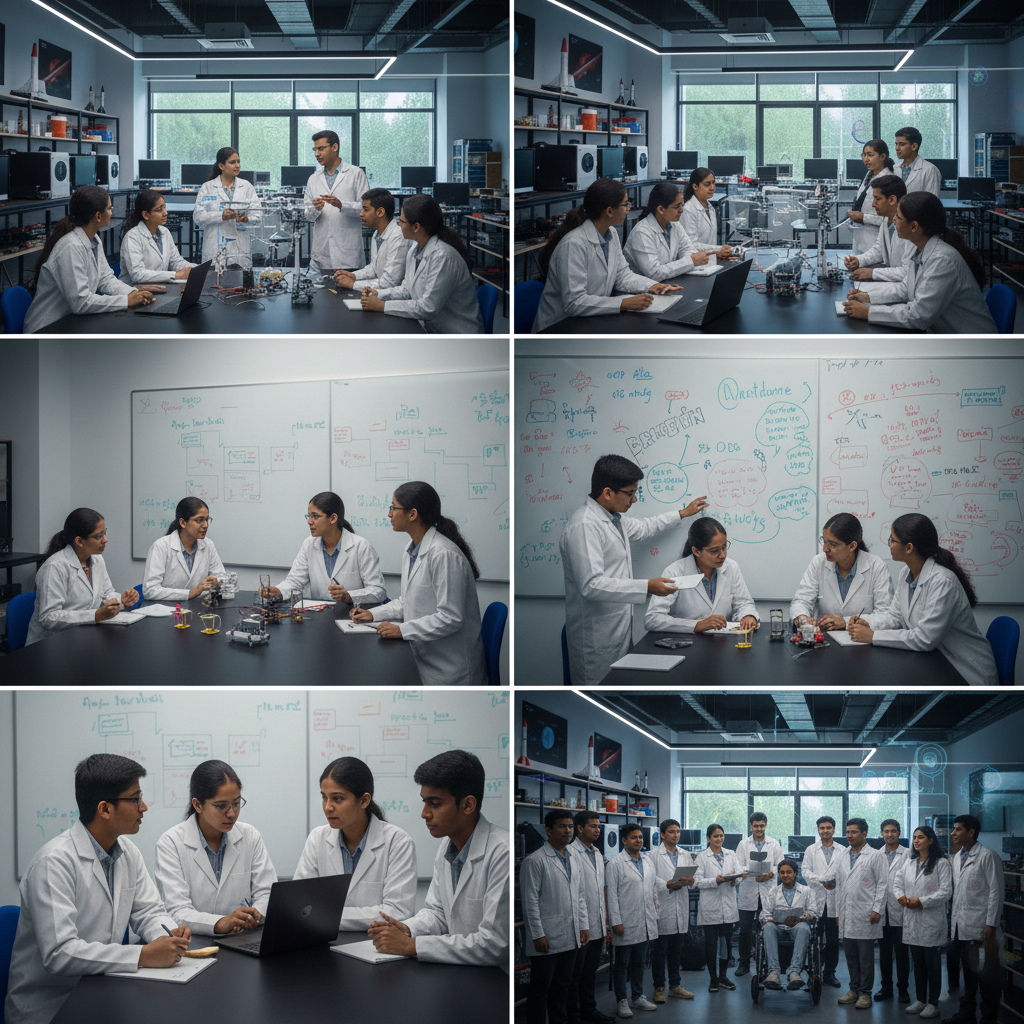
Design Thinking Process
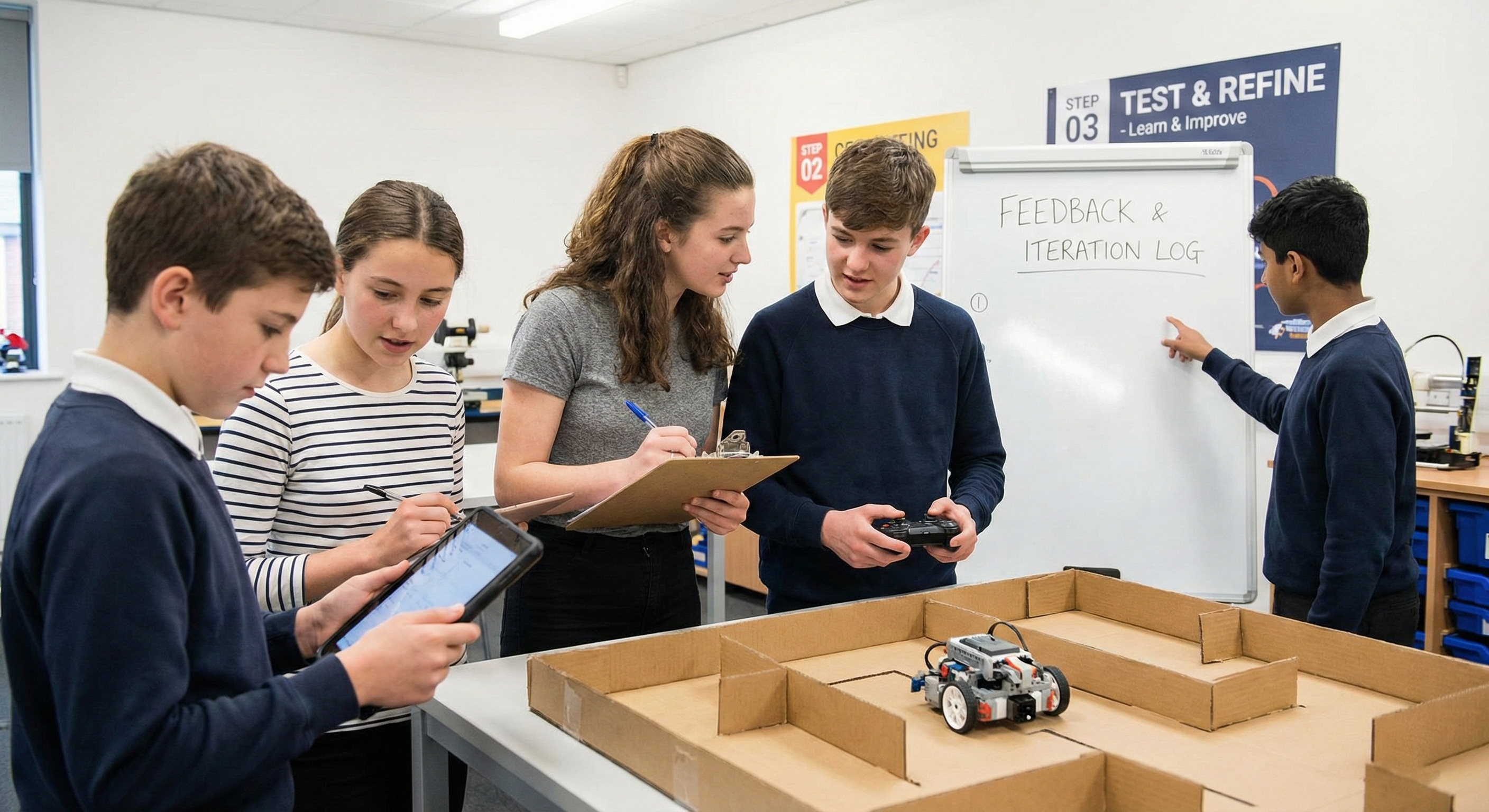
The Design Thinking process guides students from understanding user needs to building and refining solutions through continuous feedback and iteration.

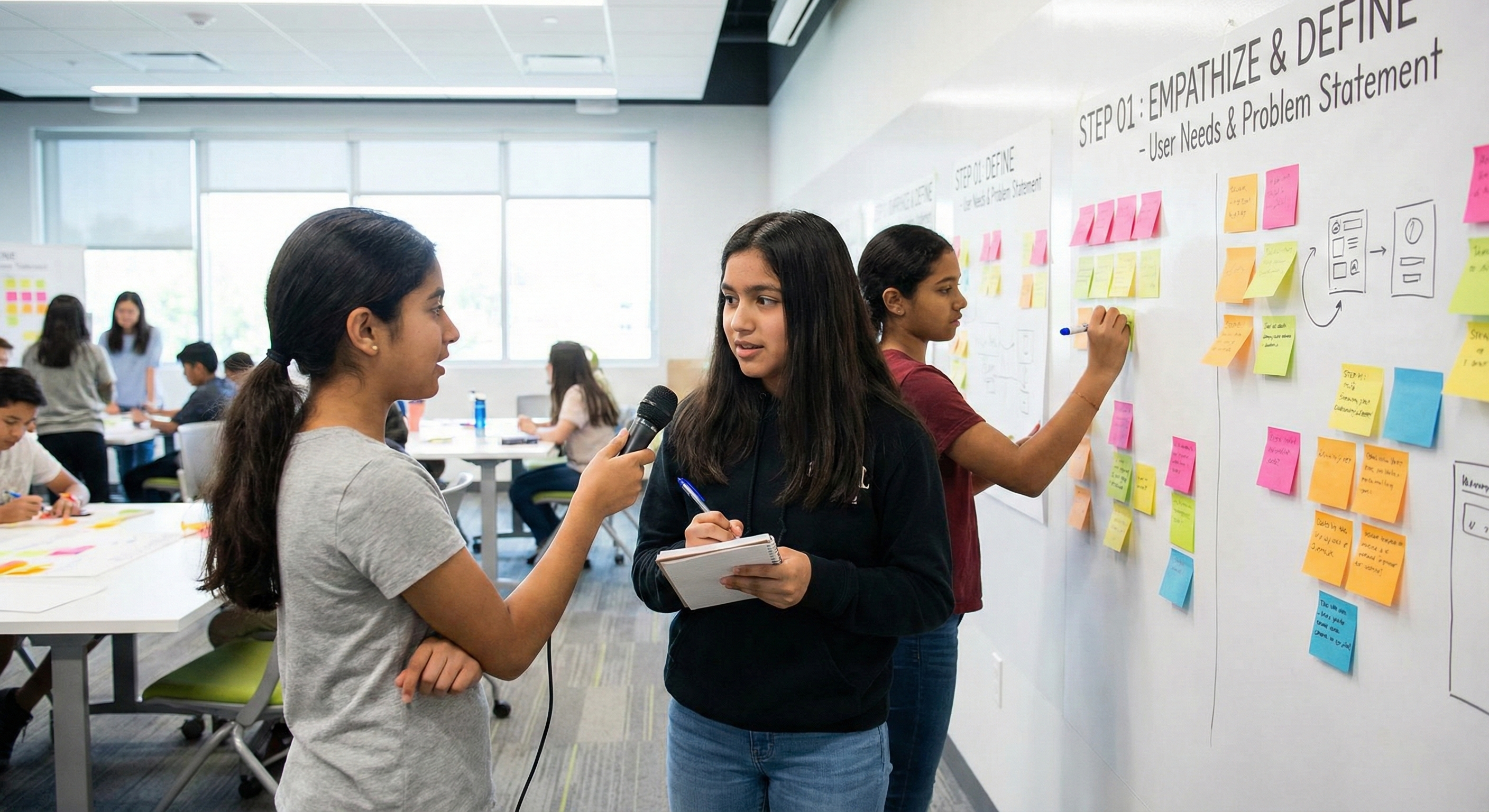
step 01
empathize & define
Understanding users, identifying challenges, and clearly defining the problem to solve.

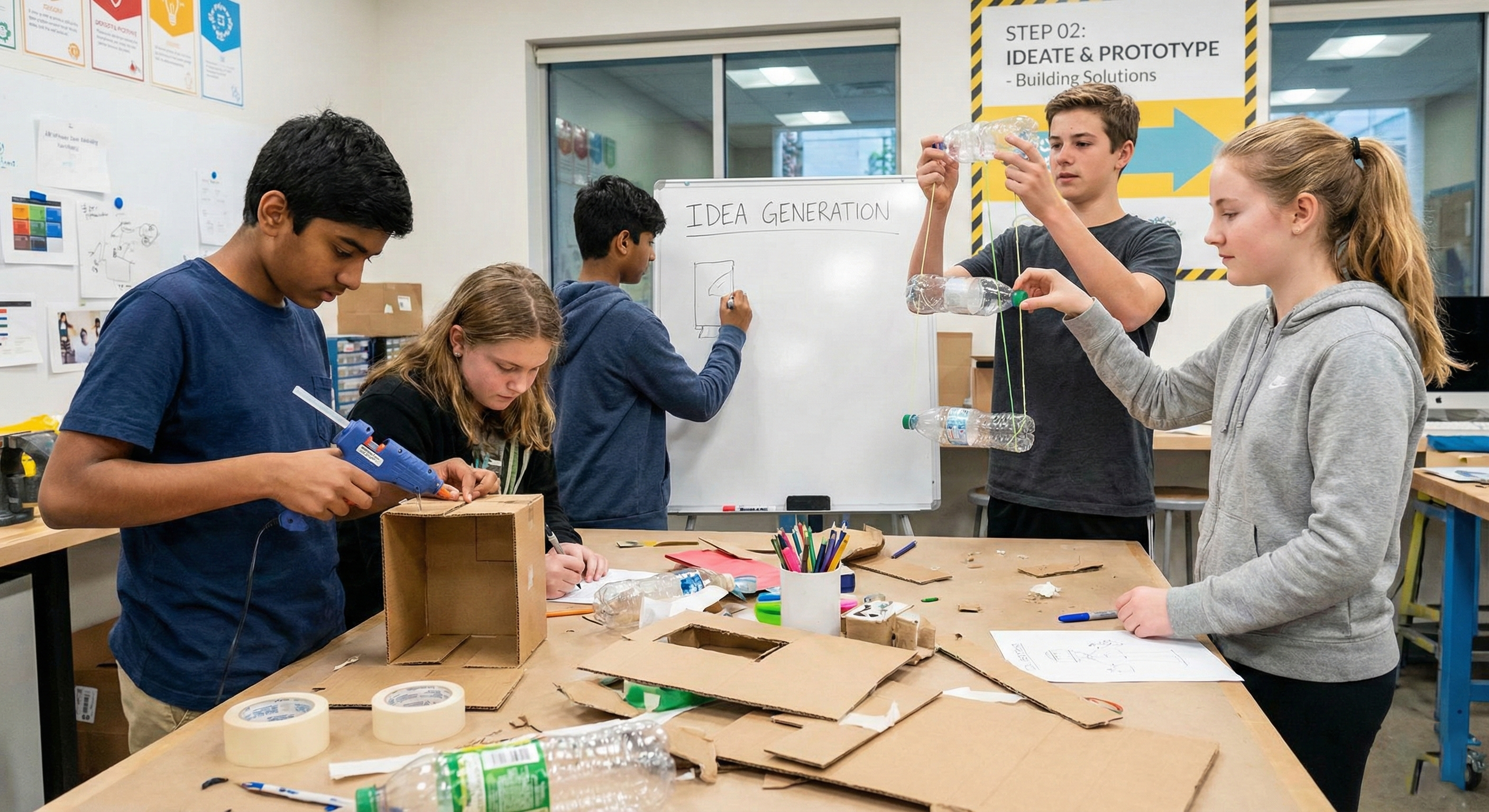
step 02
ideate & prototype
Generating creative ideas and building simple prototypes to explore solutions.

step 03
test & refine
Testing ideas, learning from feedback, and improving solutions through iteration.
Lets address your questions today!
Design Thinking is a creative problem-solving approach used to develop innovative and practical solutions by focusing on real user needs. It involves understanding problems deeply, generating ideas, building prototypes, and testing solutions in real-world scenarios.
This method is widely used in product design, technology, business innovation, healthcare, education, and entrepreneurship. It helps students think creatively, understand user perspectives, and develop meaningful solutions to complex challenges.
No prior design experience is required. Design Thinking is beginner-friendly and structured in a way that helps students gradually build creative confidence and problem-solving skills.
Students learn essential concepts such as empathy, ideation, prototyping, and testing through practical activities and real-life examples. This ensures that learners from any academic background can easily understand and apply the process.
Design Thinking enhances critical thinking, creativity, communication, and structured problem-solving. Students learn how to analyze problems, generate innovative ideas, and develop practical solutions.
These skills improve academic performance across subjects and prepare students for project-based learning, research work, and real-world challenges. It also builds confidence and encourages independent thinking.
Yes, teamwork and collaboration are essential parts of Design Thinking. Students work in groups to share ideas, understand different perspectives, and develop solutions together.
This collaborative environment improves communication skills, leadership abilities, and teamwork, which are essential for success in modern academic and professional environments.
Design Thinking prepares students for future careers by developing creativity, innovation, adaptability, and user-focused problem-solving skills. Students can explore exciting career roles such as:
- Service Designer
- Human-Centered Design Researcher
- CX (Customer Experience) Strategist
- Innovation Program Manager
- Design Sprint Facilitator
- Business Innovation Lead
- EdTech Product Designer
- Healthcare Innovation Designer
- Sustainability Designer
- Corporate Innovation Consultant
These careers are in high demand across industries such as technology, business, healthcare, education, startups, and social innovation. Design Thinking also empowers students to create their own products, launch startups, and contribute to meaningful innovations in the future.

 +971 54475 7039